ALMA MÁTER
Fotografía
2012-2013, España





ALMA MÁTER
Fotografía
2014, Alemania
Textos críticos sobre la serie:
MADRES
Un poco de historia
La iconografía de la maternidad ha sido, probablemente, uno de los asuntos más frecuentados por la historia del arte, desde las tempranas figurillas paleolíticas conocidas como “venus” hasta los últimos capítulos de la creación contemporánea. La lactancia ha tenido asimismo una significativa presencia en numerosas manifestaciones artísticas de distintas épocas y contextos culturales, no solo en Occidente, también en el arte precolombino, africano y asiático. Existen, por ejemplo, diversas efigies de la diosa Isis lactante entronizada junto a Horus dentro del arte egipcio del periodo tardío y representaciones tempranas del arte copto, igual que en el arte fenicio la diosa madre Astarté, una asimilación de la Innana sumeria o de la Isthar mesopotámica. Todas ellas constatan el culto a la Gran Diosa, identificada con la Madre Tierra (Gaia), divinidad suprema de la fertilidad, ampliamente extendido entre las culturas mediterráneas. Del mismo modo, en el arte griego encontramos imágenes de la diosa Hera amamantando a Heracles, origen del mito de la Vía Láctea, o de la llamada Kourotrophos (la que nutre al niño), similar a la Magna Mater romana.
Las primeras representaciones del arte paleocristiano, a partir del fresco de la Virgen amamantando al Niño de las Catacumbas de Priscila en Roma (uno de los primeros modelos de iconografía mariana), van a homologar la imagen de la Virgen con la de las diosas-madre de la antigüedad. La virgen lactante, apodada Virgen de la Leche o Virgen del Reposo, se desarrollará sobre todoa finales de la Edad Media y durante el Renacimiento, bien entronizada con el niño en su regazo, descansando durante la Huida a Egipto o junto a algún santo adulto como ocurre con la lactación mística de San Bernardo. El arte bizantino cultivará incluso una tipología específica, denominada Galactotrofusa, característica de la iconografía ortodoxa. Con el Concilio de Trento este tipo de representaciones se verán drásticamente reducidas por considerarse impúdicas; limitaciones que, por desgracia, han persistido en el tiempo (por ejemplo, en la época victoriana, las madres cubrían su rostro con un paño para poder fotografiarse junto a sus retoños y hoy la censura sigue siendo una constante en las redes sociales). Con todo, las representaciones de la virgen madre nutricia del arte cristiano han dominado la iconografía de la lactancia en la historia del arte –salvo curiosas excepciones, como la de Magdalena Ventura en “La mujer barbuda”, firmada por José de Ribera en 1631–hasta bien entrado el siglo XIX, en el que comienzan a propagarse las maternidades que restringen a las mujeres al ámbito privado, asunto este que será retomado una y otra vez por los grandes nombres de la Historia del Arte.
Todas estas obras, firmadas casi siempre por hombres, van a imponer un ideal de maternidad fabricado desde la perspectiva masculina y bajo el prisma del patriarcado. Se trata de una madre, casi siempre de un varón, que se presenta como símbolo de pureza y modelo de virtudes, igual que la Virgen: inmaculada, abnegada, intachable, complaciente, sufrida, omnipresente… Esta construcción cultural va a fomentar un modelo de subjetividad y un comportamiento específico que ha tenido un hondo calado en el inconsciente colectivo, extendiendo la idea de que todas las mujeres poseemos el mismo instinto maternal –como si no fuéramos capaces de tomar nuestras propias decisiones– y solo alcanzamos nuestra plenitud en el momento en que nos convertimos en madres. El resultado es una maternidad prefijada y prefabricada que responde a una ideología de instrumentalización hacia las mujeres, llena de presiones e imposiciones que dispensa todo un repertorio de normas que dictan cómo debe ser una buena madre, obviando por completo sus necesidades y su bienestar.
Con el cambio del siglo XIX al XX, las mujeres comenzaron a representarse a sí mismas, liberándose de algunos estereotipos o roles impuestos, y mostrando la maternidad y la lactancia desde otro punto de vista, sobre todo a partir de la segunda ola del movimiento feminista. Desde Mary Cassatt, Paula Modersohn-Becker, Kathe Kollwitz, Tamara de Lempicka, Frida Kahlo,Gertrude Stanton, Dorothea Lange, Diane Arbus, Tina Modotti o Lola Álvarez Bravo hasta algunas artistas de la Womanhouse, Mary Kelly, Annette Messager, Sally Mann, Vanessa Beecroft,Catherine Opie, Rineke Dijkstra, Renee Cox, Ana Casas Broda, Nicola Constantino o Ana Álvarez-Errecalde –y estos son solo algunos nombres–, hay significativos ejemplos de artistas que reflejan la experiencia de ser madres bajo nuevos parámetros bien alejados del modelo cristiano impuesto en Occidente.
Alma Máter
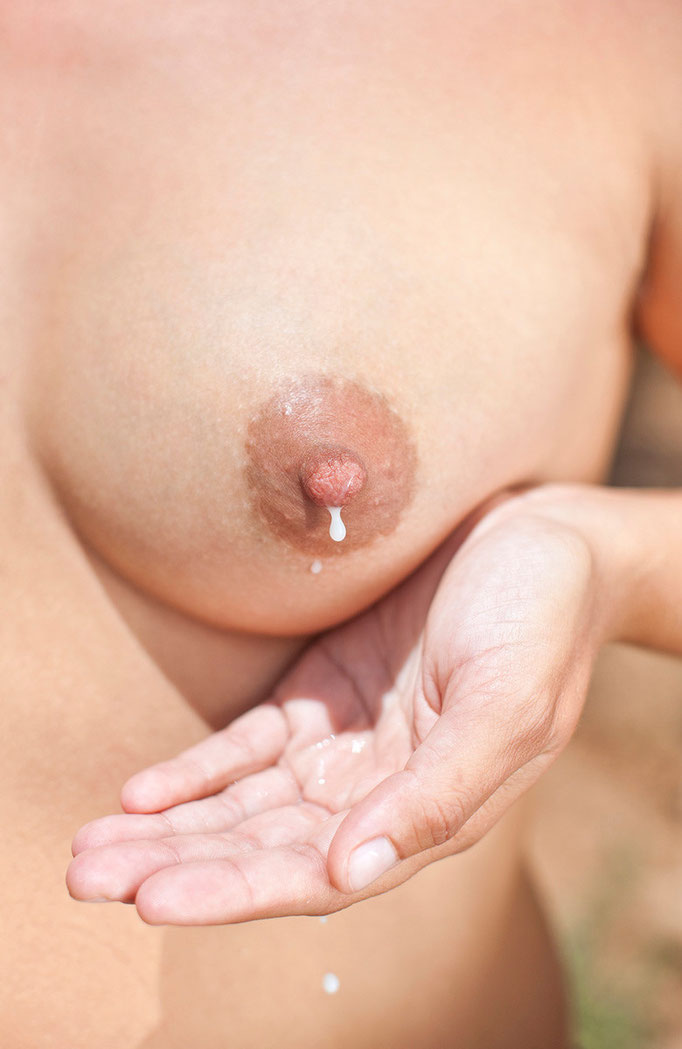
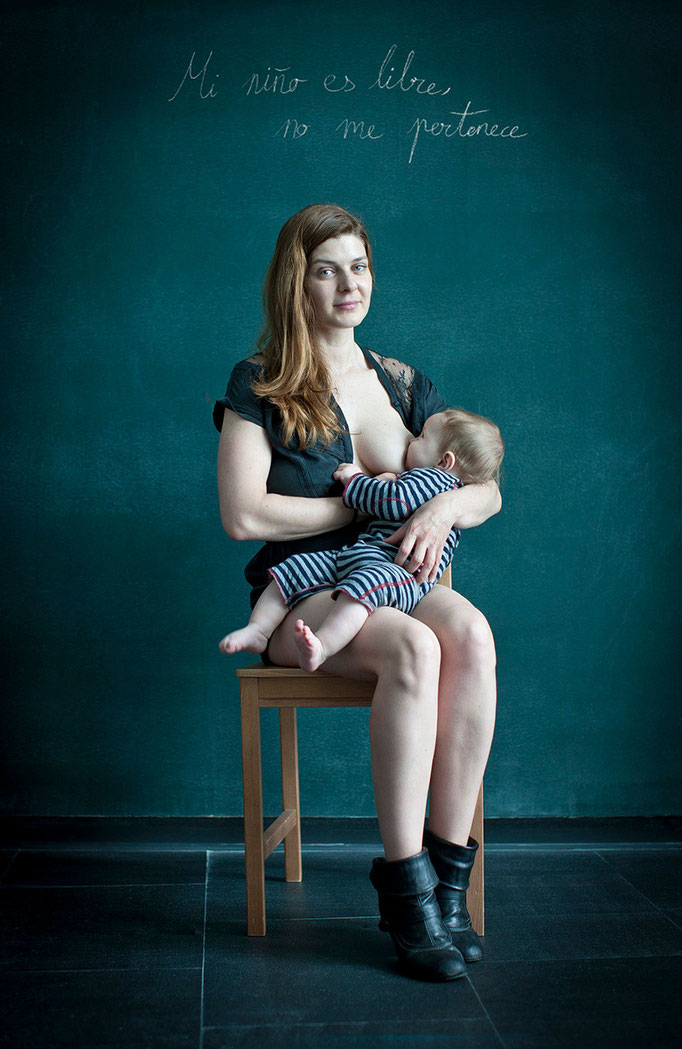
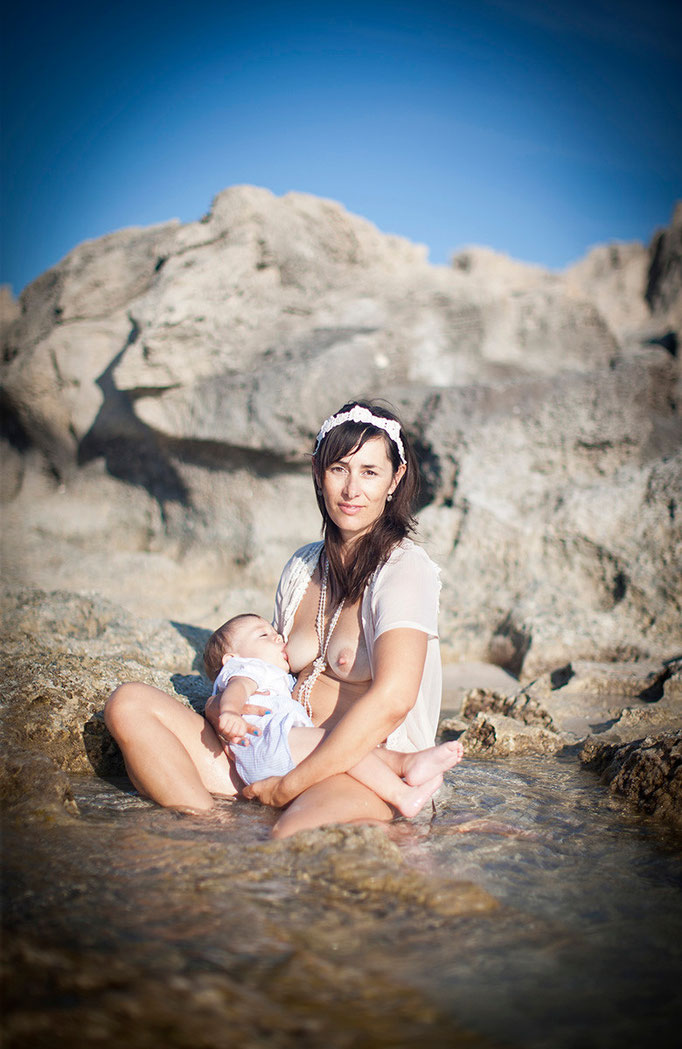
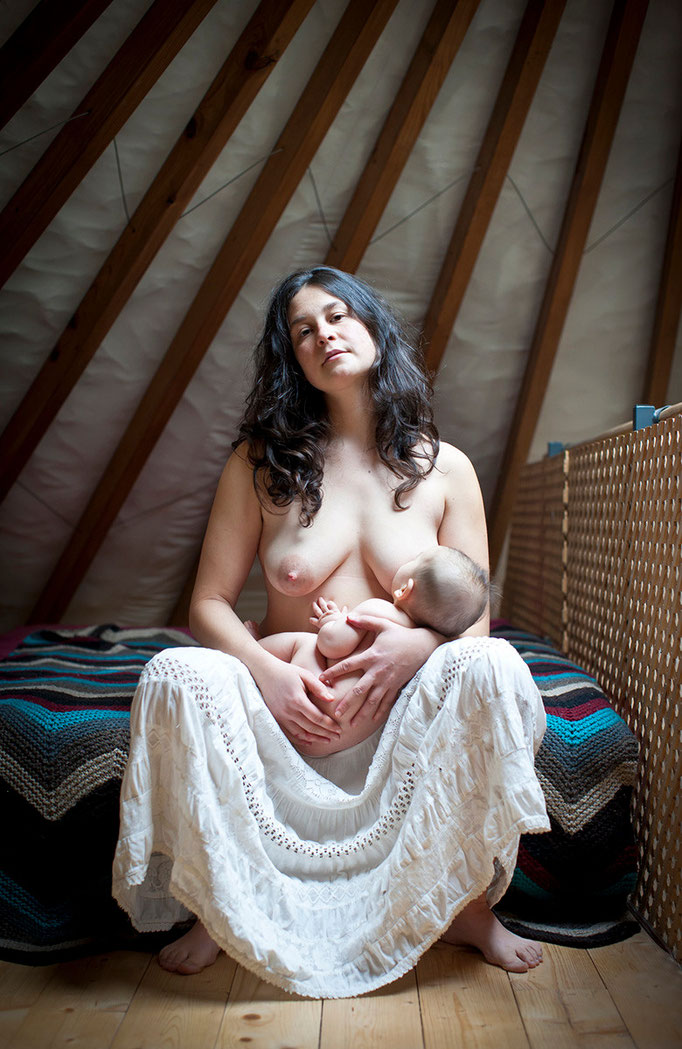
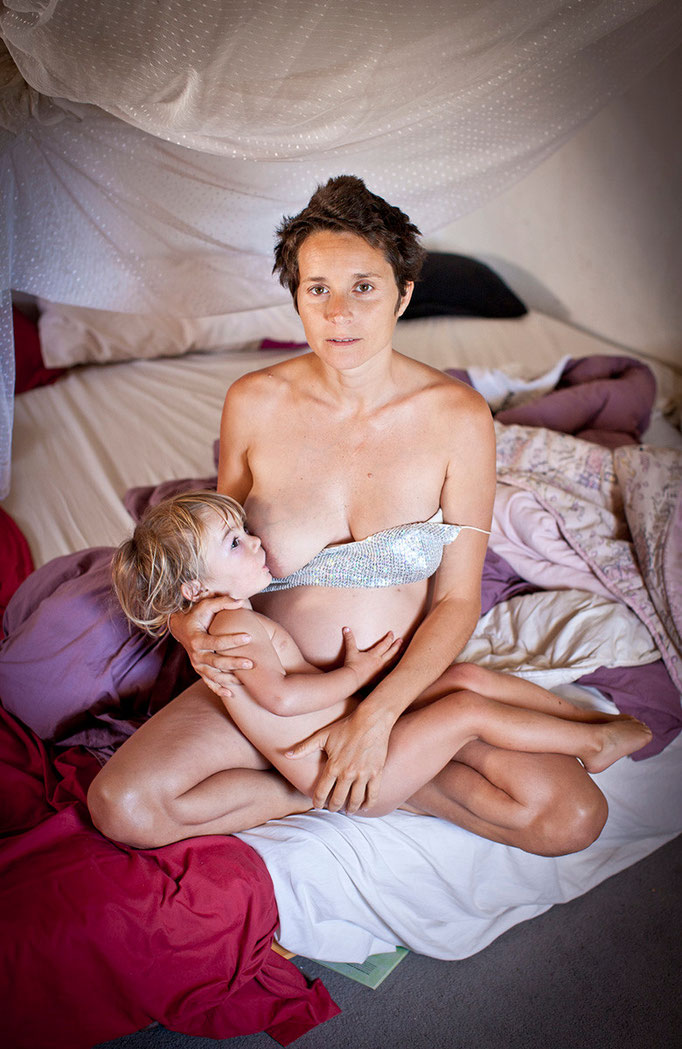
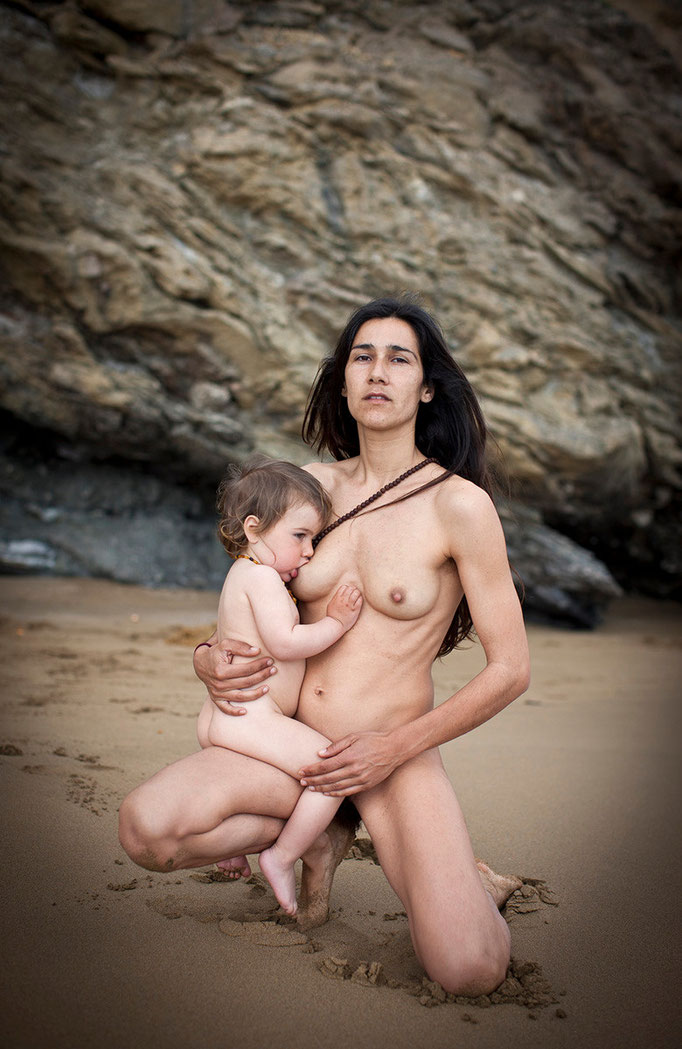
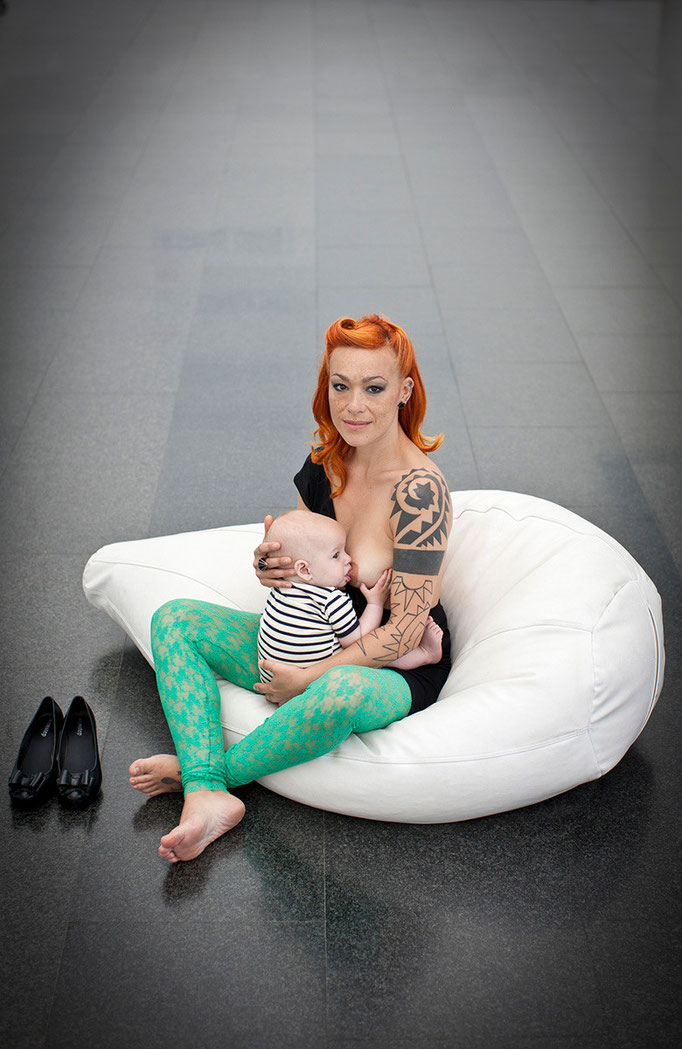
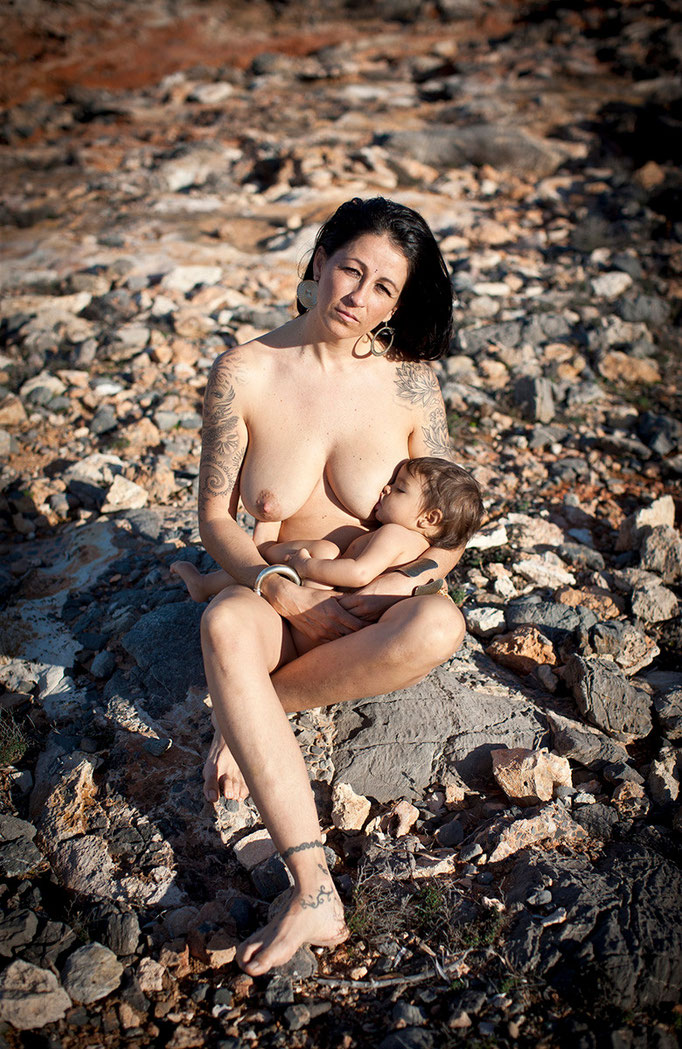
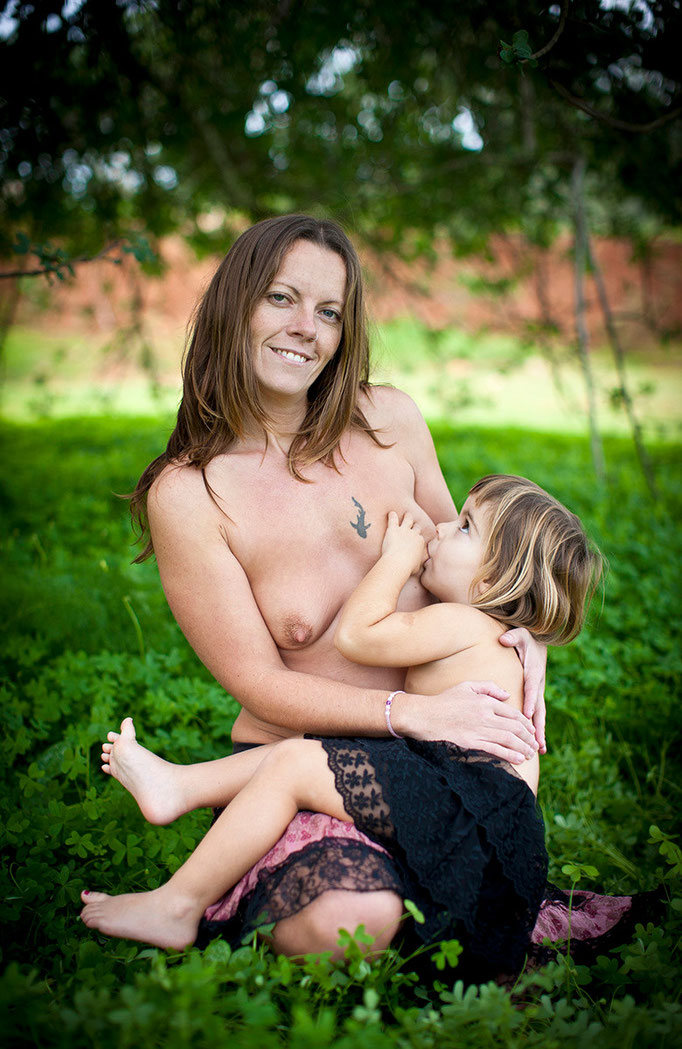
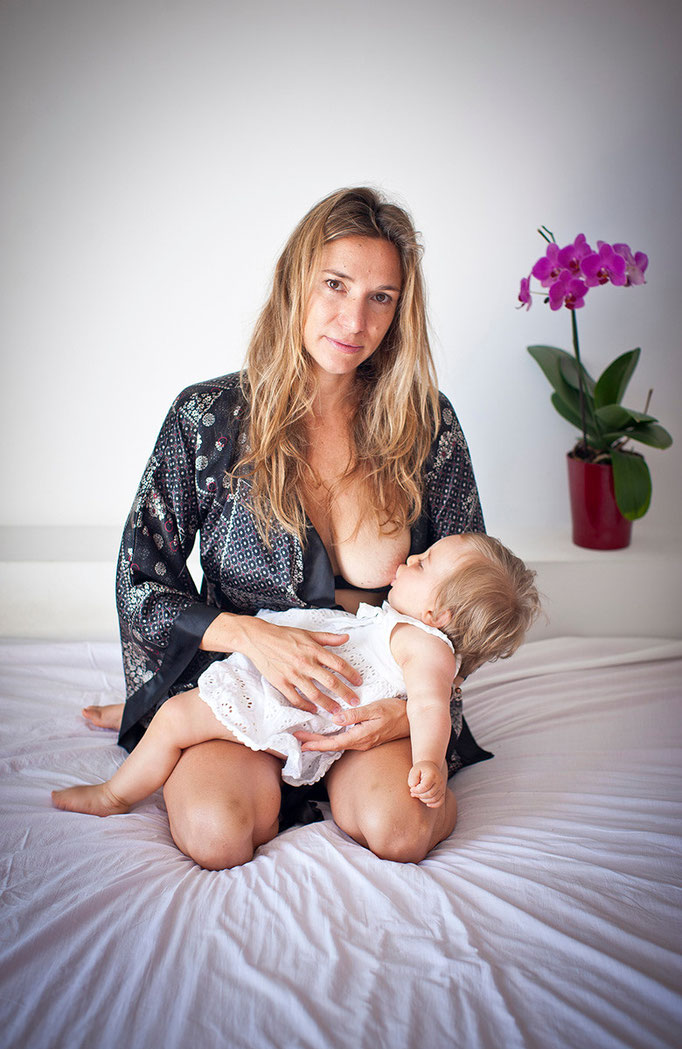
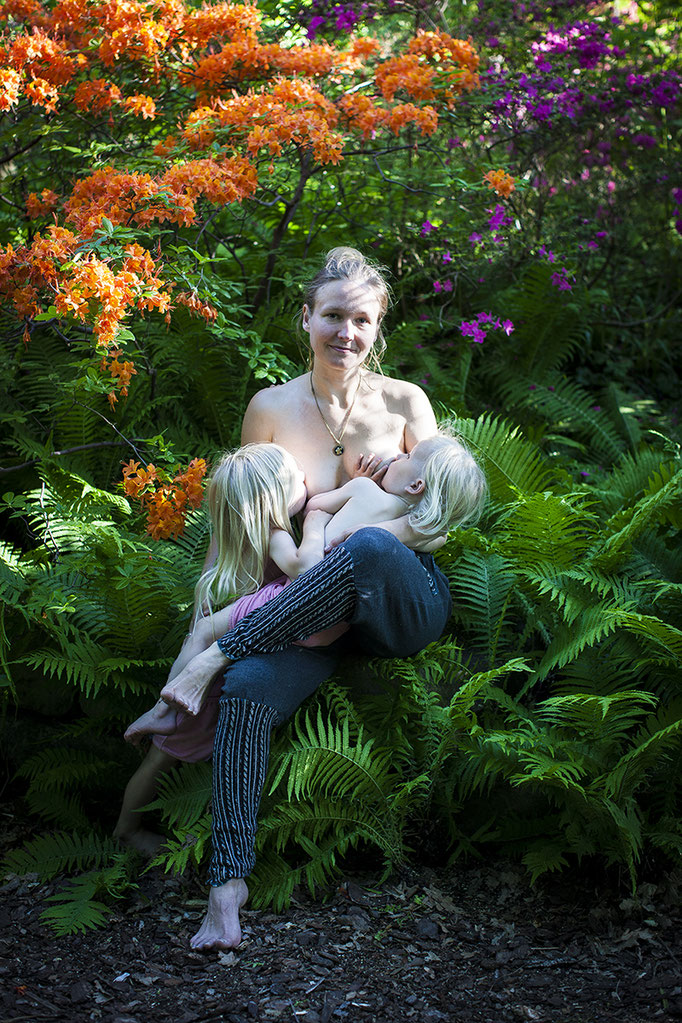
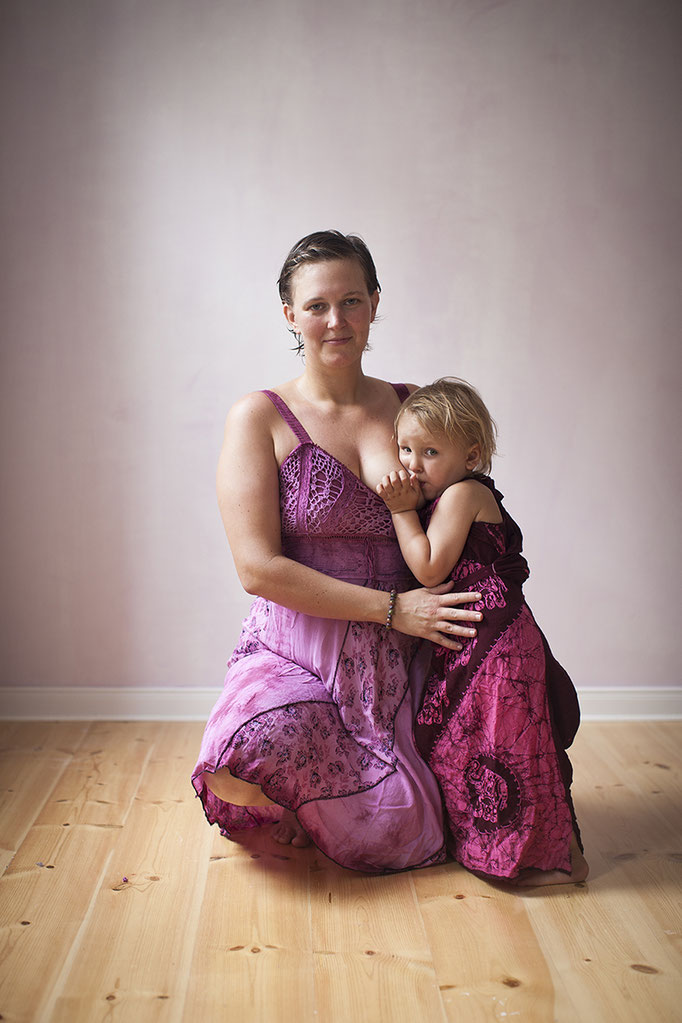
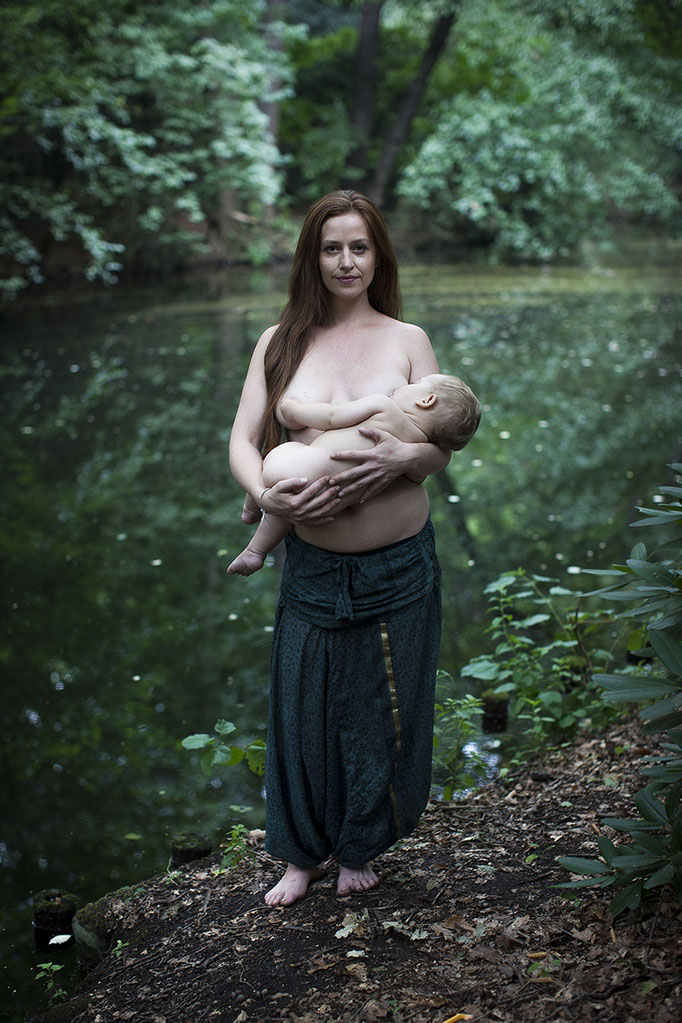
Con estos precedentes, llegamos al proyecto “Alma Máter” de Isa Sanz, compuesto por una serie de fotografías de mujeres amamantando a sus hijas o hijos. Un primer plano de un seno con leche materna vertiéndose sobre una mano –símbolo de transferencia que encarna la energía de la vida y, seguramente, nexo de unión con su anterior trabajo sobre otro fluido que conecta con los ciclos naturales: la sangre menstrual (“Sangro pero no muero”)– sirve de prólogo al proyecto.
Cada fotografía está rubricada con el nombre de la madre y el de su hija/hijo, de manera que no se trata de mujeres anónimas, sino que estamos ante personas con identidades diversas retratadas en el instante en que forman un solo cuerpo con sus crías y, en cierto modo, componen la misma unidad simbólica. Isa Sanz visibiliza la relación materno-filial para indagar precisamente en lo no visible. El acto de amamantar nos remite al momento original de nuestra existencia y también al inicio de nuestro camino hacia la independencia; un instante de comunicación, marcado por el contacto profundo, tan trascendente como complejo, que inaugura un proceso de tránsito, crecimiento y construcción identitaria, tanto para la madre como para su hija/hijo, que resulta nuevo para ambos.
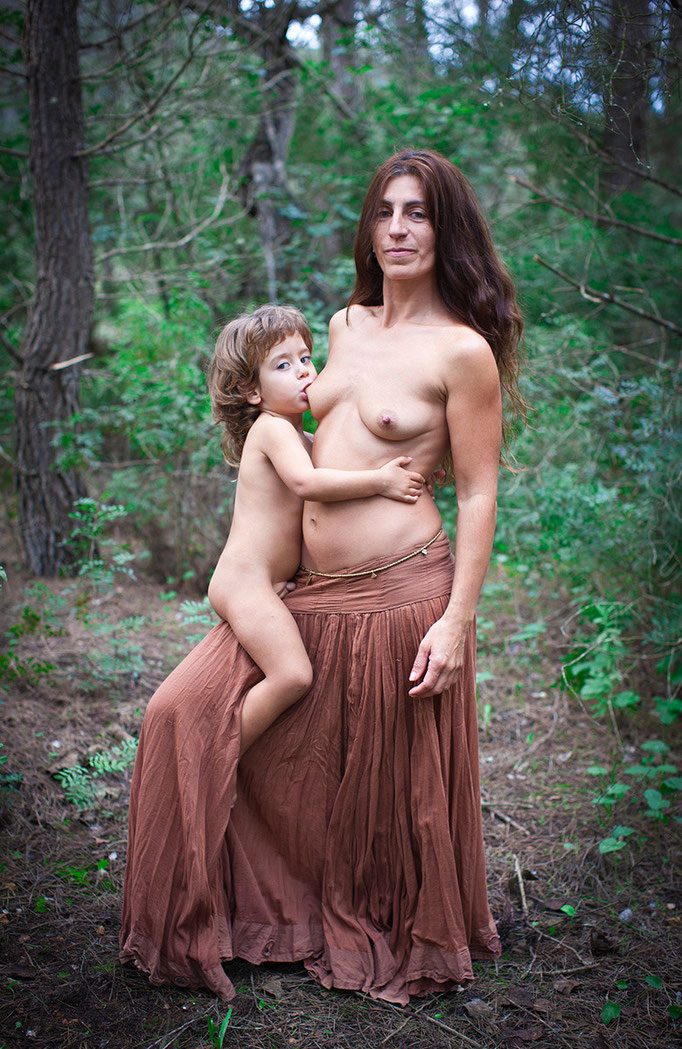
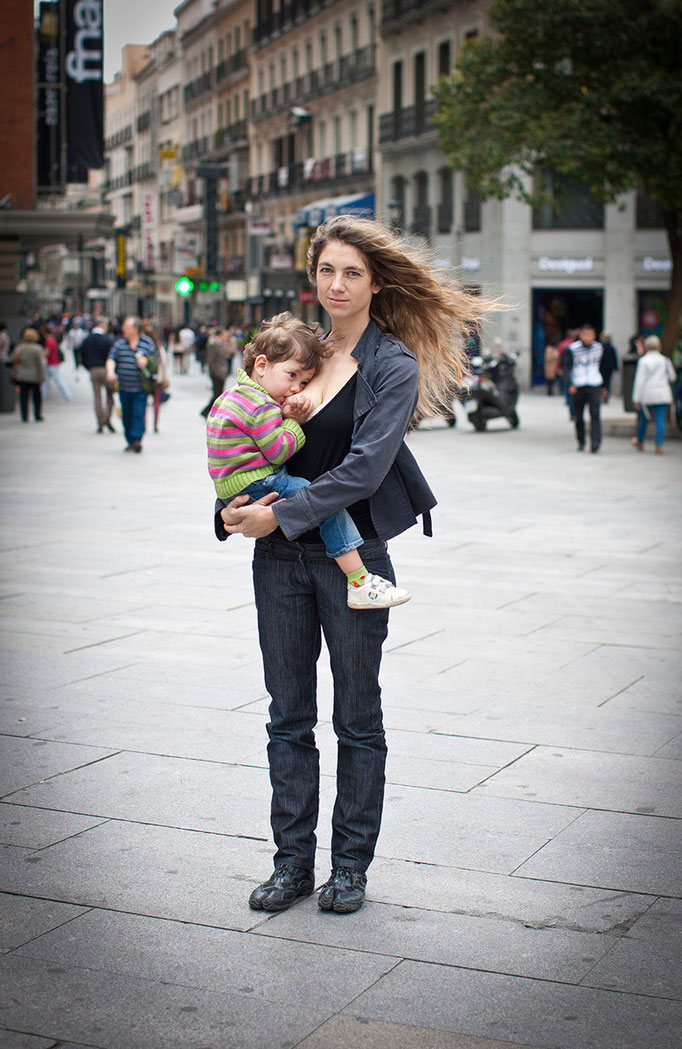
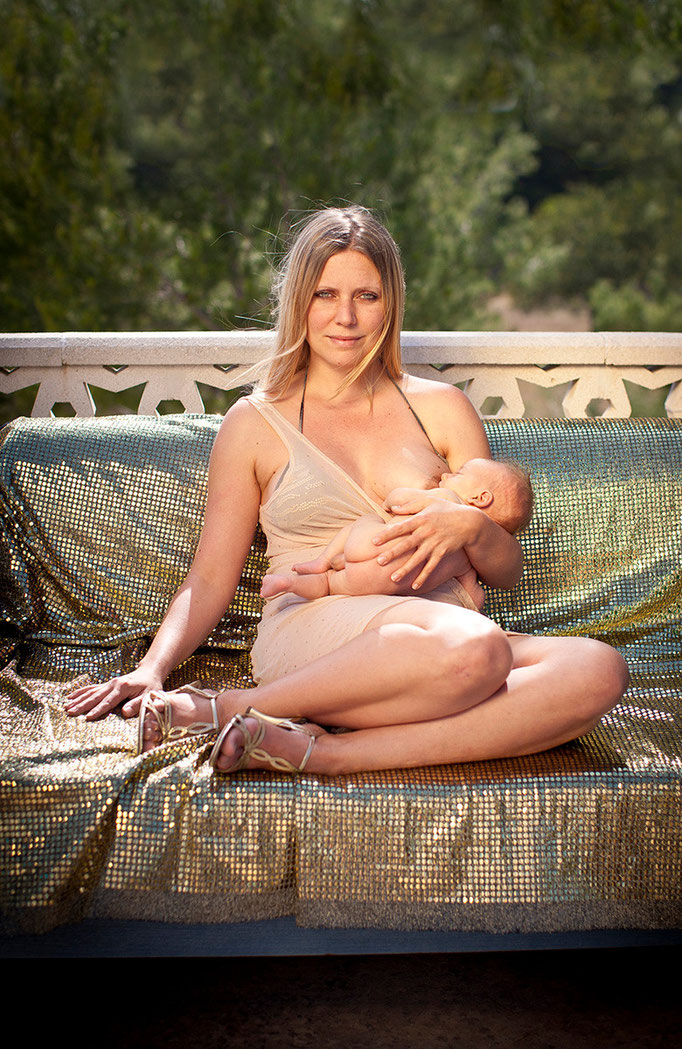
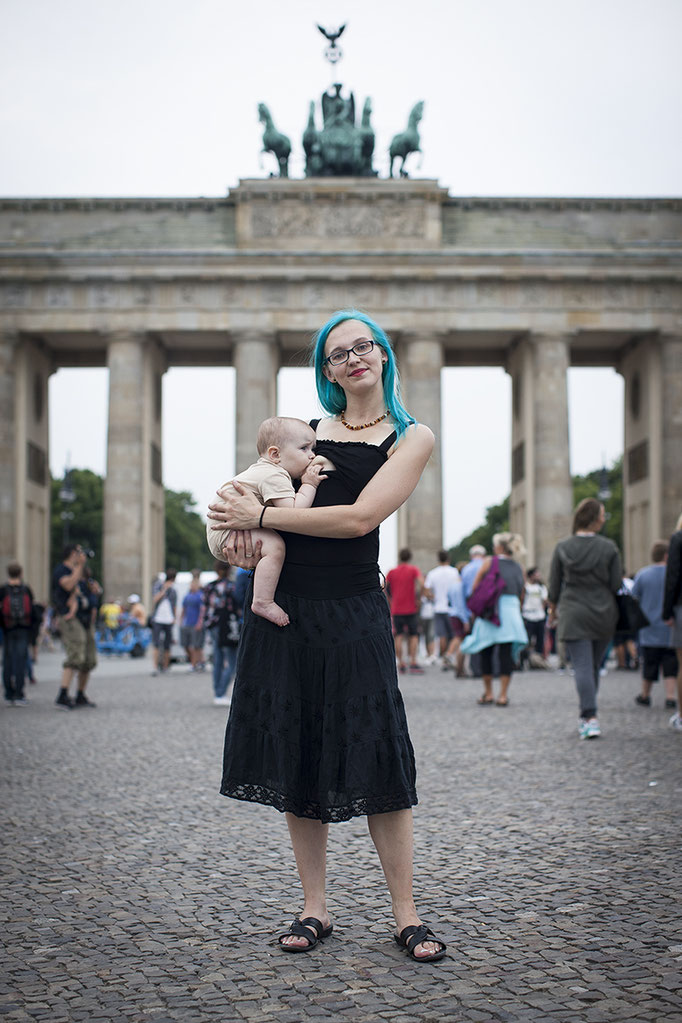
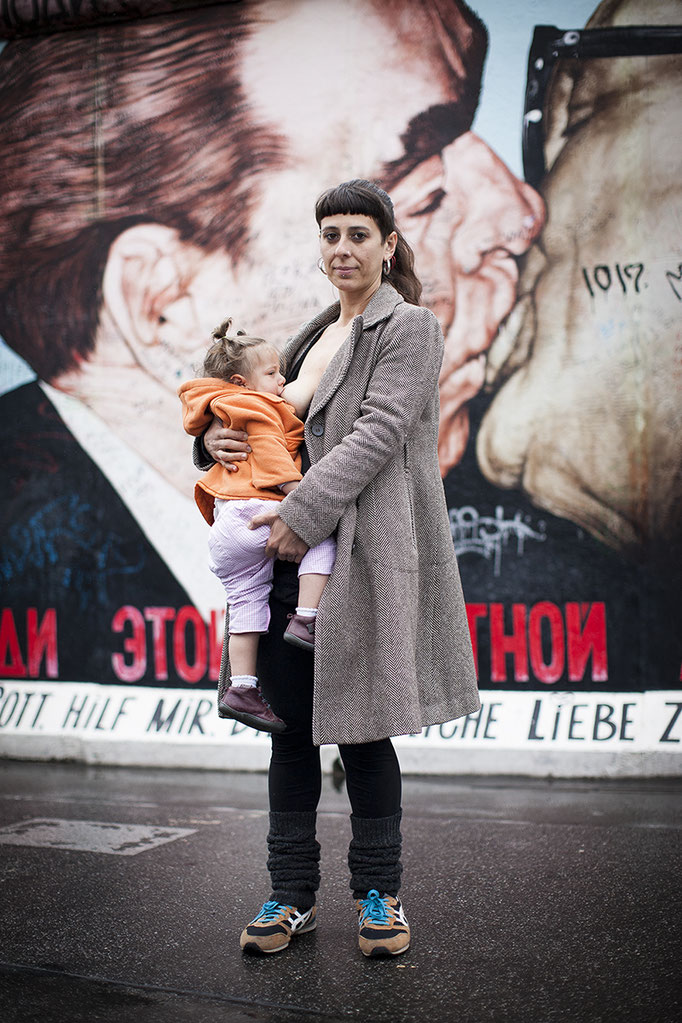
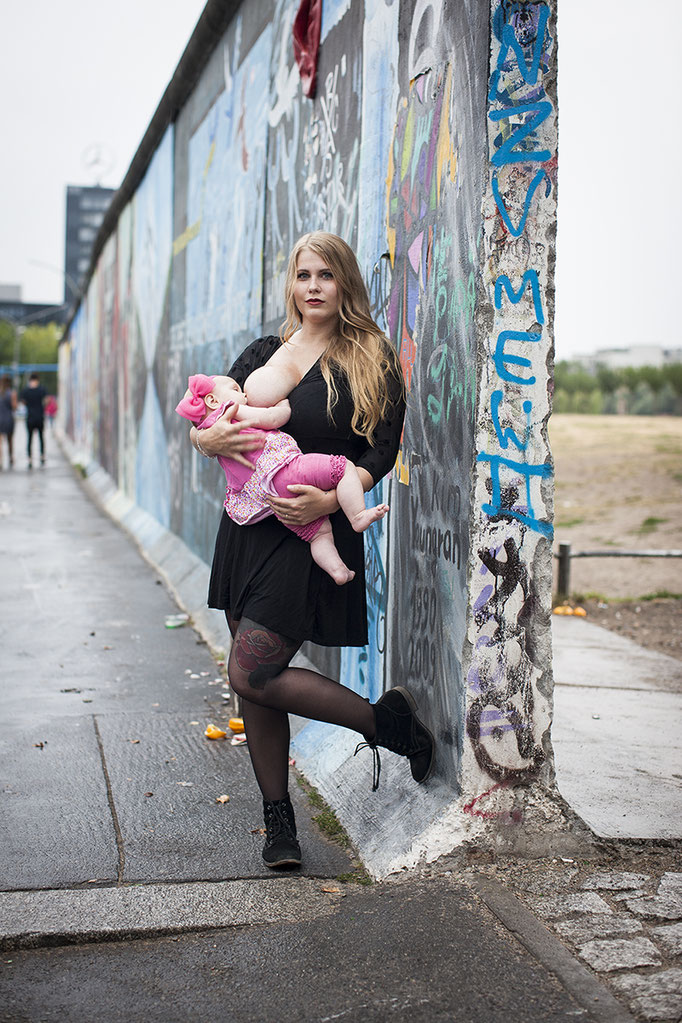
La misma escena se repite en todas las fotografías. Solo cambian las protagonistas, la posición de sus cuerpos y el emplazamiento. Las madres comparten y hacen visible ese instante íntimo que constituye la experiencia de dar el pecho en el espacio público, solo que aquí el lugar que servía de contexto a las representaciones religiosas de antaño (la llamada Gruta de la Leche, donde la Virgen amamantó al niño durante su huida a Egipto, tiñendo las rocas de blanco con su líquido “milagroso”), es ahora un bosque, un claustro, la playa, una escuela, una calle en medio de la ciudad o su propia casa; entornos más o menos cotidianos a los que otorga nuevos significados y funciones.
Las madres posan orgullosas y firmes, bien asentadas en el espacio, con poco atrezo. Todo está cuidado, pero la imagen final resulta espontánea y natural. La complicidad entre madre e hija/hijo se proyecta asimismo entre cada una de estas mujeres y la fotógrafa en un ejercicio de confianza mutua. Isa Sanz fija el objetivo de su cámara en los ojos de las protagonistas que, de este modo, miran directamente a los nuestros provocando la confluencia, abriendo un diálogo y estrechando la distancia emocional. Mientras que las representaciones del pasado solo nos permitían acceder al espacio privado como simples voyeurs, estas fotografías fomentan una experiencia compartida cuyo eje es la mirada directa.
“Alma Máter” nos sitúa frente a mujeres valientes que superan cada día los miedos, dudas e incertidumbres que lleva aparejada la crianza y el cuidado de una persona en los primeros estadios de su vida. Sin embargo, su mirada, igual que la posición de sus cuerpos, transmite sensaciones de bienestar, armonía, serenidad y, sobre todo, empoderamiento, ya que se afirman como madres, pero también como personas. La decisión de dar el pecho seguramente haya obedecido a motivaciones muy diversas y no a una mera imposición cultural o a una ráfaga de instinto. Estas mujeres parecen asumir su papel materno como una vivencia consciente ejercida desde la libertad; han decidido implicarse en el cuidado afectivo y activo a través de la lactancia, a sabiendas de que esta puede ser profundamente dolorosa y de que la crianza no resulta fácil en un sistema como el nuestro, que penaliza la maternidad. Las mujeres que deciden ser madres se ven obligadas a hacer frente a numerosas dificultades –por no decir auténticos malabarismos– para conciliar lo personal, lo familiar y lo profesional, obstáculos en su vida laboral, ciudades llenas de trabas, y todo un repertorio de presiones y prescripciones que responden a intereses económicos, políticos e ideológicos, ignorando que la maternidad es un valor que enriquece al conjunto de la sociedad y hace que el mundo, tal como lo conocemos ahora, siga girando.Vale la pena recordar que lo personal –tal como advirtiera Kathe Millet en su momento– también es político y, por tanto, nos incumbe a todos, independientemente del género que nos hayan asignado. Alimentar con el propio cuerpo es, ante todo, una muestra de amor que requiere mucho coraje, responsabilidad y una entrega que muchas veces desborda los límites de lo que imaginamos. Visibilizar esta labor invisible, tal como nos propone Isa Sanz en este proyecto, es poner en valor y dignificar el acto de mayor generosidad que un ser humano puede tener hacia otro.
Marta Mantecón. Historiadora del arte y comisaria.
LA VÍA LÁCTEA
Vivimos una época que requiere propuestas artísticas sustentadas desde el universo complejo de las ideas, mostrando aspectos esenciales que deben ser revalidados, puesto que ya han sido ‘dichos’ con anterioridad.
Este mundo -el artístico y el espacio ‘real‘ que habitamos- precisa que le conduzcan, guíen a un necesario camino hacia la lucidez. “Dadme otras madres y os daré otro mundo” decía San Agustín.
Maternidad y lactancia han estado presentes en manifestaciones tanto del arte prehistórico y clásico, como en otras pertenecientes a la actualidad. La visión que la fotógrafa Isa Sanz nos propone en Alma máter, aparece enriquecida bajo un prisma ideológico, cuasi filosófico.
Los mass media exponen cada día, con ‘naturalidad’ y total impunidad, imágenes cargadas de violencia y horror. En medio de este escenario repleto de sensibilidades anestesiadas, ¿puede existir un ‘antídoto’ más eficaz y hermoso que mostrar un acto de amor entre madre e hijo como es la lactancia?
La artista encarna -en cada proyecto que emprende- a ‘LA MUJER’, se convierte en cada mujer que fotografía. Refleja en su obra aspectos pertenecientes al territorio de la psique, ‘desnuda’ el inconsciente colectivo femenino: esa poderosa energía que camina junto a todas las mujeres desde los albores de la humanidad. Sus retratos apelan asimismo, a lo espiritual, a ese interesante ‘lado por descubrir’, en el sentido de que existe un lugar ‘interior’ que necesita ser iluminado, no obviado.
“(…) Esta es la tarea de cada ser humano: atravesar la vida terrenal en busca de su propia sombra, para llevarla a la luz y caminar el propio sendero de sanación (…). El bebé se convierte en espejo cristalino de nuestros aspectos más ocultos. Por eso el contacto profundo con un bebé debería ser un período para aprovechar al máximo.”
Laura Gutman (1)
Ese ‘ser total’ -con su luz y su sombra- que somos cada una de nosotras es el que aflora de sus manos ‘cazadoras’ de eternidad.
“(…) Una vez terminado el acontecimiento, la fotografía aún existirá, confiriéndole una especie de inmortalidad (e importancia) de la que jamás habría gozado de otra manera (…)”.
Susan Sontag (2)
Nos encontramos, por tanto, ante una creadora que transita, con igual talento, por geografías que oscilan entre el intelecto y las emociones.
Una mujer puede decidir ‘pasar de puntillas’ por su maternidad o alcanzar con ella ‘la experiencia de su vida’. Son dos alternativas muy diversas e igualmente respetables. Si es su voluntad alimentar la oportunidad transformadora que parir un hijo le brinda, esta senda le conducirá -seguramente- a ser más consciente de la ‘niña-mujer-ser’ que ha sido, y a cabalgar -desde ese mismo conocimiento- hacia esa otra MUJER que quiere SER. Todo esto está presente en las imágenes de Sanz.
Ya lo inició en su anterior -e imprescindible- trabajo Sangro pero no muero donde presentó la menstruación como la ‘otra’ oportunidad que las mujeres tenemos al alcance para ‘renacer‘.
“(…) Una mujer que toma conciencia de su ciclo y las energías inherentes a él también aprende a percibir un nivel de vida que va más allá de lo visible; mantiene un vínculo intuitivo con las energías de la vida, el nacimiento y la muerte, y siente la divinidad dentro de la tierra y de sí misma. A partir de ese conocimiento la mujer se relaciona no sólo con lo visible y terrenal sino con aspectos invisibles y espirituales de su existencia (…).”
Miranda Gray (3)
Alma máter nos habla de mujeres que quizá aún no hayan recuperado la menstruación -es conocido que la lactancia puede inhibirla- y el maravilloso viaje que supone sostener ese vínculo ‘lácteo’, estrecha conexión en la díada madre hijo. Sus protagonistas son féminas comprometidas con la lactancia hasta donde su corazón e instinto les dictan.
La mujer que lacta ‘rebosa’ prolactina, una hormona ‘aliada’, que junto a la oxitocina, llamada ‘hormona del amor’, le hace sentir el bienestar, recogimiento y disposición adecuados para desarrollar esa tarea que supone estar plenamente centrada en la crianza.
“(…) La madre que alimenta a su bebé se encuentra en un equilibrio hormonal especial, es decir, bajo los efectos de la prolactina, la hormona indispensable para que el pecho segregue leche. (…) Cuando una mujer amamanta, todos los efectos de la ‘hormona del amor’ se dirigen hacia el bebé, que se convierte en el objeto de su amor; la subordinación hace que esté totalmente disponible frente a cualquier demanda del bebé (….).”
Michel Odent (4)
La leche ‘engancha’. Me atrevería a decir que por igual a madre e hijo. No en vano en muchos grupos de apoyo al puerperio y la crianza se escuchan frases de este cariz: “Lo hemos dejado”, “Mi bebé se ha quitado”, “Estoy intentando cortarlo”, etc.… expresiones que parecen definir una adicción, una “dependencia a…”.
Este es realmente el quid de la cuestión. Somos dependientes una ‘pequeña-gran’ etapa que ayudará a conquistar la independencia y la armonía en nuestras vidas adultas.
“(…) Creo que si amamantáramos y conserváramos realmente a ‘upa’ a los bebés todos creceríamos más felices y las carencias afectivas no estarían tan representadas en las guerras que peleamos afuera (…)”.
Laura Gutman (5)
La mamá que decide conservar la lactancia, más allá de un lapso temporal ‘estándar’, desoye sugerencias ‘médicas’, puesto que -a pesar de que la OMS recomienda prolongar la lactancia más allá de los dos primeros años de vida- en la práctica, muchos ‘profesionales’ sanitarios se permiten sugerir la introducción del ‘rentable’ biberón.
Además, enfrenta opiniones procedentes de su propio entorno en el que otras mujeres (amigas, familiares, vecinas…etc.) -que optaron conscientemente por no mantenerla, o ni siquiera probaron a amamantar- tratan de ‘evangelizar‘ a ‘recién llegadas’, quizá intentando así solucionar su propia contradicción interior.
La madre que amamanta ‘se marcha’ de lo cotidiano y alcanza ese espacio donde construye una estrecha relación de amor para fusionarse con ‘su’ criatura, percibiendo y satisfaciendo las sensaciones y necesidades del pequeño como propias.
Por otra parte, el bebé lactante se convierte en un ‘yonqui’ de la teta: ¡¿cómo iba a ser de otra manera?!”. Mamá le proporciona, a través de su pecho, lo que precisa para llegar a convertirse en un ser autónomo, seguro, cimentado en el cariño y el milagroso contacto con su progenitora. Así es la lactancia, nada más y nada menos. Y esos instantes esenciales en el desarrollo de un nuevo ser son los que fotografía la cámara de esta artista.
Isa Sanz es una militante de ‘La vía láctea’, pone su objetivo al servicio de algo en lo que cree firmemente. Esta serie de imágenes de madres y lactantes es un manifiesto, toda una declaración de principios.
Sus mujeres son ‘guerreras’ que de la mano de otra mujer, una hechicera de la imagen, aparecen en nuestra mirada para recordarnos qué es lo auténtico y mágico de esta vida. Sus fotografías llegan hasta nuestras retinas para que no nos distraigamos de lo primordial, aquello que tiene que sobrevivir, perpetuarse por el propio bien de la especie.
Por otra parte, algunas manifestaciones artísticas conectan con una determinada voz, que casi parece dictar la obra que debe ser creada, pintada, escrita, fotografiada… concebida en definitiva.
El gran Leonard Cohen en su discurso al recibir el Premio Príncipe de Asturias de las letras 2011 apuntaba: “(…) La poesía viene de un lugar que nadie controla, que nadie conquista.” Cohen se refería a que la poesía, las canciones, nacen de un lugar desconocido de nosotros mismos.
Vamos a afirmar que con las fotografías sucede igual, puesto que cuando un artista ‘siente la llamada’: ¿qué otra cosa puede hacer que entregarse en cuerpo y alma a ese estímulo inexplorado y crear?
A Sanz le ha sucedido con ‘su’ Alma Máter, donde el universo de la maternidad y su vínculo por excelencia, ‘han aparecido’ como la mejor inspiración. Ha conectado con esta ‘vibración’ y una vez que ha elaborado -intelectual y emocionalmente- lo que quería mostrar, casi mágicamente surgieron cada una de sus modelos: mujeres que caminan con firmeza por ‘La vía Láctea’ acompañadas de sus hijos.
Su obra nos está dando un mensaje muy claro: “Esto que veis es sagrado, la muestra de amor más primigenia y absoluta. Mis dedos fotografían ‘Verdad’, para que no os olvidéis de ella”.
Alma máter: ‘madre nutricia’, madres que alimentan, en el sentido más amplio del término. Una fabulosa colección de fotografías ‘enriquecida’ por las gotas de Hera, de todas ‘las Heras’ que generosamente han compartido su intimidad, permitiendo que el objetivo de Sanz entre en este ‘gineceo’.
Son madres, es amor universal.
Una última cosa:
He posado para ella, porque creo en ella: la lactancia.
He escrito para ella, porque también creo en ella: la artista.
Verónica Serrada, escritora y madre. Aparece junto a Coen en Alma máter.
BIBLIOGRAFÍA
1 Gutman, Laura, “La maternidad y el encuentro con la propia sombra”, Buenos Aires, Ed. Del Nuevo Extremo, 2012, (pp. 26- 27).
2 Sontag, Susan, “Sobre la fotografía”, México D.F., Ed. Alfaguara, 2006 (p. 26).
3 Gray, Miranda, “Luna Roja”, Madrid, Gaia Ediciones, 1999 (p.75).
4 Odent, Michel, “El bebé es un mamífero” Ed. Ob Stare, S/C. de Tenerife, 2009 (p.150).
5 Gutman, Laura, “La maternidad y el encuentro con la propia sombra”, Buenos Aires, Ed. Del Nuevo Extremo, 2012, (p.113).
Critical texts on the series:
MOTHERS
A Little Bit of History
The iconography of motherhood has been probably one of the most frequented topics in the history of art. From the early Paleolithic statuettes known as "Venus", to the last chapters of the contemporary creation. Breastfeeding, likewise, has had a significant presence in many art forms from different eras and cultural contexts, not only in the West, but also in the pre-Columbian, African and Asian art. There are, for example, various statues of the goddess Isis enthroned whilst nursing Horus inside the Egyptian art in the late period and earliest representations of Coptic art, as in the Phoenician art, the mother goddess Astarte, an assimilation of the Sumerian Inanna or Mesopotamian Ishtar. All these are proof of the worship to Great Goddess identified as the Mother Earth (Gaia), the supreme deity of fertility, widespread among mediterranean cultures. Similarly, in Greek art there are images of the goddess Hera breastfeeding Heracles, which starts the Milky Way myth, or the also called Kourotrophos (the one who nourishes the child), similar to the Roman Magna Mater.
The first representations of early Christian art, since the fresco of the Madonna nursing the Child of the Catacombs of Priscilla in Rome (one of the first models of Marian iconography) will homologize the image of the Virgin with the mother-goddesses of antiquity. The breastfeeding virgin, nicknamed Nursing Madonna or Madonna Lactans, develops especially in the late Middle Ages and during the Renaissance period, well enthroned with the child in her lap, resting during the escape to Egypt or next to some adult saint as occurs in the mystical lactation of San Bernardo. Byzantine art will cultivate even a specific typology called Galactotrofusa, characteristic of the Orthodox iconography. With the Council of Trent such representations will be drastically reduced being considered unchaste; limitations that unfortunately have persisted over time (e.g. in Victorian times, mothers covered their faces with a cloth to be photographed next to their offspring and today censorship remains a constant in social networks). However, the representations of the Nursing Madonna, mother the of Christian art have dominated the iconography of breastfeeding in history of art, except curious exceptions, like Magdalena Ventura in The Bearded Woman by José de Ribera in 1631 until well into the nineteenth century, where they start spreading the maternities, restricting women to the private sphere, matter that will be taken up again and again by the biggest names in art history.
All these works, signed mostly by men, will impose an ideal of motherhood, made from the male perspective and under the perspective of patriarchy. It is a mother, almost always from a male, presented as a symbol of purity and model of virtue, like a Madonna: immaculate, selfless, flawless, agreeable, suffered, omnipresent. This cultural construction will promote a model of subjectivity and a specific behavior that has had a deep impact in the collective unconscious, spreading the idea that all women possess the same maternal instinct, as if we were not able to make our own decisions and only reach our self-realization the time we become mothers. The result is a preset and prefabricated maternity that responds to an ideology of objectification towards women, full of pressures and impositions that provide a whole repertoire of rules that dictate how to be a good mother, completely ignoring their needs and wellbeing.
With the turn of the century XIX to XX, women started to picture themselves, getting free from some of the stereotypes or imposed roles, and showing maternity and breastfeeding from other point of view, especially after the second wave of the feminist movement. From Mary Cassatt, Paula Modersohn-Becker, Kathe Kollwitz, Tamara de Lempicka, Frida Kahlo, Gertrude Stanton, Dorothea Lange, Diane Arbus, Tina Modotti or Lola Álvarez Bravo, to some of the artists from the Womanhouse, Mary Kelly, Annette Messager, Sally Mann, Vanessa Beecroft, Catherine Opie, Rineke Dijkstra, Renee Cox, Ana Casas Broda, Nicola Constantino or Ana Álvarez-Errecalde –and these are only some names-, there are significant examples of artists that reflect the experience of being mothers under new parameters really distant from the Christian model imposed in the West.
Alma Máter
With this precedents we get to Isa Sanz’s project “Alma Máter”, formed by a series of photographs of women breastfeeding his daughters or sons. A foreground of a breast with mother’s milk being poured over a hand –a symbol of transference that embodies life’s energy and, probably, a meeting ground with her previous work about another fluid that connects the natural cycles: the menstrual blodd (“Sangro pero no muero”)- serves as a prologue to the project.
Every photograph is signed with the mother’s and the daughter’s/son’s name, so it is not about anonymous women, but we are facing people with diverse identities pictured in the moment where the form a unique body with their offspring and, somehow, the form the very same symbolic unity. Isa Sanz makes visible the mother-child relationship to inquire precisely about what is not visible. The act of breastfeeding brings us back to the original point of our existence and to the beginning of our journey towards independence; an instant of communication marked by deep contact, so transcendental and complex that inaugurates a process of transition, growth and identity construction for the mother and the child, which is new for both.
The same scene is repeated in every picture. Only the protagonists, the position of their bodies and the location changes. Mothers share and make visible the intimate moment that constitutes the experience of breastfeeding in a public space, except that here, the place that served as a context to the religious representations in old times (called the Milk Grotto where the Madonna breastfed her child during the escape to Egypt, staining the rocks with her white "miraculous" liquid), is now a forest, a cloister, the beach, a school, a street in the middle of the city or their own home; more or less everyday environments to which it gives new meanings and functions.
Mothers pose proud and firm, well settled in the space, with slight venture. Everything is taken care of, but the final image turns out spontaneous and natural. The complicity between mother and child is also projected between each of these women and the photographer in an exercise of mutual trust. Isa Sanz sets the camera lens in the eyes of the protagonists, and by doing so looking directly to our own, causing confluence, opening a dialogue and narrowing emotional distance. While representations of the past only allowed us to access the private space as mere voyeurs, these pictures foster a shared experience whose axis is the direct gaze.
"Alma Mater" places us in front of brave women who overcome the fear, doubt and uncertainty that entails raising and caring for a person in the early stages of their life, everyday. However, their glance, like the position of their bodies, transmit sensations of wellbeing, harmony, serenity and above all, empowerment, as they are affirmed as mothers but also as people. The decision to breastfeed has surely been obeyed by very different motivations, and it is not merely a cultural imposition or a burst of instinct. These women seem to assume their maternal role as a conscious experience exerted from freedom; they have decided to get involved in the affective and active care through breastfeeding, knowing that it can be deeply painful and that parenting is not easy in a system like ours, which penalizes motherhood. Women who choose to be mothers are forced to face many difficulties if not real balancing acts to conciliate personal, family and professional obstacles in their lives, cities full of obstacles, and a repertoire of pressures and requirements responding to economic, political and ideological interests, ignoring that motherhood is a value that enriches the whole of society and makes up the world as we know it. It is worth remembering that what is personal, as warned by Kathe Millet in her time, is also political and therefore, concerns us all, regardless of the gender we have been assigned. Feeding with the body itself is primarily a token of love that requires a lot of courage, responsibility and dedication that often exceeds the limits of what we imagine. Making visible this invisible work, as Isa Sanz proposes in this project, is enhancing and dignifying the most generous act that a human being can have towards another one.
Marta Mantecón.
THE MILKY WAY
We live in a time requiring artistic proposals supported by the complex universe of ideas which display essential aspects that must be revalidated because, of course, they have already been 'told'.
This world -the artistic world and the 'real' space we inhabit- needs to be steered, guided, towards a necessary path to lucidity. "Give me other mothers and I will give you another world", to quote Saint Augustine.
Maternity and breastfeeding have been present in equal measure in both prehistoric and classical art and in the most recent artistic manifestations. The vision suggested to us by photographer Isa Sanz in Alma Mater emerges enriched through an ideological, quasi-philosophical prism.
In a 'natural' way and with total impunity, the mass media are constantly displaying images loaded with violence and horror. In the midst of this scenario crowded with anaesthetised sensibilities, can there be a more effective and beautiful 'antidote' than to portray the act of love between mother and child, as embodied by breastfeeding?
In each project she embarks upon, the artist embodies 'WOMAN' and becomes every single woman she photographs. She reflects in her work aspects belonging to the sphere of the psyche while 'undressing' the feminine collective unconscious: that powerful energy accompanying all women since the dawn of humanity. Her portraits also call on the spiritual, an interesting 'area to be discovered' -in the sense of an existing 'inner' place in need of being illuminated rather than obviated.
“(…) This is the work of each human being: to go through earthly life searching for her or his own shadow, to bring light to it and to tread her or his own path of healing (…). The baby then becomes a pristine mirror for our most hidden aspects. That is why close contact with a baby should be a time not to be wasted at all.”
Laura Gutman(1)
The being that surfaces from her hands 'hunting' eternity is that 'complete being' -with its light and its shadow- which is each one of us.
“(…) After the event has ended, the picture will still exist, conferring on the event a kind of immortality (and importance) it would never otherwise have enjoyed (…).”
SusanSontag (2)
We are therefore in the company of an artist who journeys, with equal talent, through geographies oscillating between the intellect and the emotions.
A woman may decide to 'tiptoe' through her maternity or to use it to reach 'the experience of her lifetime.' These are two very different options, but each is as worthy of respect as the other. If she chooses to nourish the opportunity for transformation inherent in giving birth to a child, this path will most likely take her to greater awareness of the 'girl-woman-being' she has been, and to ride -from that same knowledge- towards that other WOMAN who wants to BE. Sanz's images contain all this.
She already started along this path in Sangro, pero no muero ("I bleed, but I do not die")-her previous and indispensable work- where she represented menstruation as the 'other' opportunity available for women to 'be reborn'.
“(…) A woman who realizes her cycle and the inherent energies also learn to earn a living that goes beyond the visible, maintains an intuitive link with the energies of life, birth and death, and feel the divinity within the earth and of itself. From this recognition of women is related not only to the visible and earthly but with invisible and spiritual aspects of their existence(…).”
Miranda Gray (3)
Alma Mater tells us of women who may not have resumed their menstruation yet -it is well known that breastfeeding can inhibit it- and of the wonderful journey intrinsic in that 'milky' link, that close connection in the mother-child dyad. Its main characters are females committed to breastfeeding to the degree their hearts and instincts dictate.
The breastfeeding woman 'overflows' with prolactin, an 'allied' hormone that together with oxytocin, the so-called 'love hormone', generate in her the appropriate feelings of wellbeing and gathering-in and the disposition to take on the task of being totally centred on the activity of child-rearing.
“(…) The mother who breastfeeds her baby has a special hormonal balance; she is under the effects of prolactin, the hormone essential for the breast to make milk “(…). When a woman is breastfeeding, all the effects of the "love hormone" are directed towards the baby, who becomes the object of her love; subordination makes her constantly accessible for any of the baby's demands (….)."
Michel Odent (4)
Milk is 'addictive', I would say equally for the mother and the child. Not without reason we hear comments such as "We've quit", "My baby has quit", "I'm trying to wean my baby off", etc., in many postnatal and child-rearing support groups, where expressions that seem to define an addiction to or a 'dependency on' something are used.
This is the real crux of the matter. We are dependent for a 'short-but-significant' phase that will help us to attain independence and harmony in our adult lives.
“(…) I believe that if we breastfed and really held our babies close, we would all grow up happier, and emotional lacks wouldn't be acted out as often as they are in the wars we fight in the outside world (…).”
Laura Gutman (5)
The mother who decides to carry on breastfeeding for longer than the 'standard' temporary amount of time disregards 'medical' advice; despite WHO recommendations to prolong breastfeeding beyond the first two years of life, in practice, many health 'professionals' go onto advise the introduction of 'cost-effective' bottle-feeding.
She is also 'confronting' ideas voiced in her own milieu where other women (friends, relatives, neighbours, etc.) who consciously decided not to extend breastfeeding, or who didn't even attempt it, try to 'evangelize' the 'neophyte', seeking perhaps to solve their own inner contradiction.
The mother who breastfeeds 'departs' from the everyday norm and reaches a space where she generates a close loving relationship in order to merge herself with 'her' baby, perceiving and satisfying the little one's sensations and needs as if they were her own.
In addition, the breastfeeding baby becomes a tit 'junkie': how could it be otherwise?! Mummy provides them, with her breasts, with all they need to become an independent and secure being resting upon their mother's love and miraculous contact. This artist's camera captures those essential moments in the development of a new being.
Isa Sanz is a "Milky Way" militant who places her lens at the service of something she strongly believes in. This sequence of images of mothers and infants is a manifesto, a fully grown statement of principles.
Through another woman's hand -an enchantress of the image-, her women are 'female warriors' who come into our view to remind us of what is magical and authentic in this life. Her photographs reach our retinas so that we don't get distracted from what is crucial, from what must survive and perpetuate itself for the good of our species.
Moreover, some artistic manifestations 'connect' with a specific 'voice', a voice that seems almost to 'dictate' the work that must be created, painted, written, photographed, etc. or, in short, conceived.
When granted the Prince of Asturias Award for Literature 2011, the great Leonard Cohen said in his award ceremony speech: "(…) Poetry comes from a place that no one controls, that no one conquests." Cohen meant that poetry, songs, are born in a place that is unknown to us.
We shall conclude that the same thing happens with photographs; when an artist 'feels the call', what else can she do but dedicate herself body and soul to that unexplored stimulus and be creative?
This is what has happened to Sanz in 'her' Alma Mater, where the universe of motherhood and its connection par excellence 'have appeared' as the best of inspirations. She has connected with that 'vibration' and once she has developed -both intellectually and emotionally- what she wanted to portray, each of her models appeared almost as if by magic: women who walk steadily together with their infants along "The Milky Way".
Her work is sending a very clear message to us: "What you see here is sacred, the most primordial and absolute demonstration of love. My fingers photograph 'truth' so you don't forget about it."
Alma Mater: 'nurturing mother', mothers who nourish, in the broadest sense of the word. A fabulous photograph collection 'enriched' by Hera's drops of milk, by all those 'Heras' who have generously shared their privacy and allowed Sanz's lens to enter this 'gynoecium'.
They are mothers; it is universal love.
One last thing:
I have posed for it, because I believe in it: breastfeeding.
I have written for her, because I also believe in her: the artist.
Verónica Serrada is a writer and mother. She appears next to Coen in Alma Mater.
BIBLIOGRAPHY
1 Gutman, Laura. La maternidad y el encuentro con la propia sombra, 2012
2 Sontag, Susan. On Photography, 1977
3 Gray, Miranda. Red Moon, 2009
4 Odent, Michel. Le bébé est un mammifère, 2011
5 Gutman, Laura. La maternidad y el encuentro con la propia sombra, 2012