INDÓMITAS
Fotografía
2014–2016, Ibiza.




Texto crítico sobre la serie:
INDÓMITAS
Todo lo que se dobla se rinde o se humilla. Así que yérgase.
Chantal Maillard [1]
La RAE define como indómito, ta. (del latín, indomĭtus) a quien no se puede o no se deja domar. “Amaestrar”, que en francés se traduce como élever, significa literalmente “elevar”. El verbo también se utiliza en el sentido de “educar”, pero en ambos casos se trata de elevar al que se supone inferior, sostiene Chantal Maillard [2]. Si lo natural es lo que no se puede controlar, lo doméstico, tal como afirma Jana Leo, “no remite al espacio que nos pertenece, sino al que pertenecemos; no es el espacio de nuestro dominio, sino el que nos domina pero sobre el que tenemos cierto control: sabemos cómo opera, que está regulado y que tiene tiempos, repeticiones y ritmos” [3]. Indomable es, por tanto, quien se resiste al proceso de domesticación, incluyendo todo el repertorio de comportamientos normalizados que dicho régimen trae consigo.
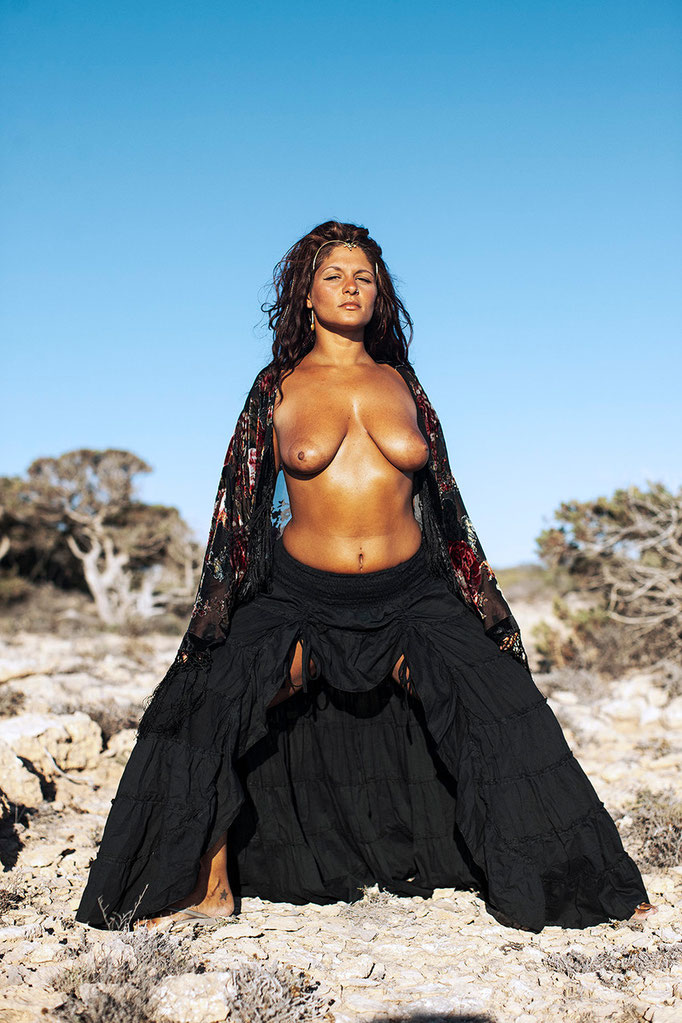
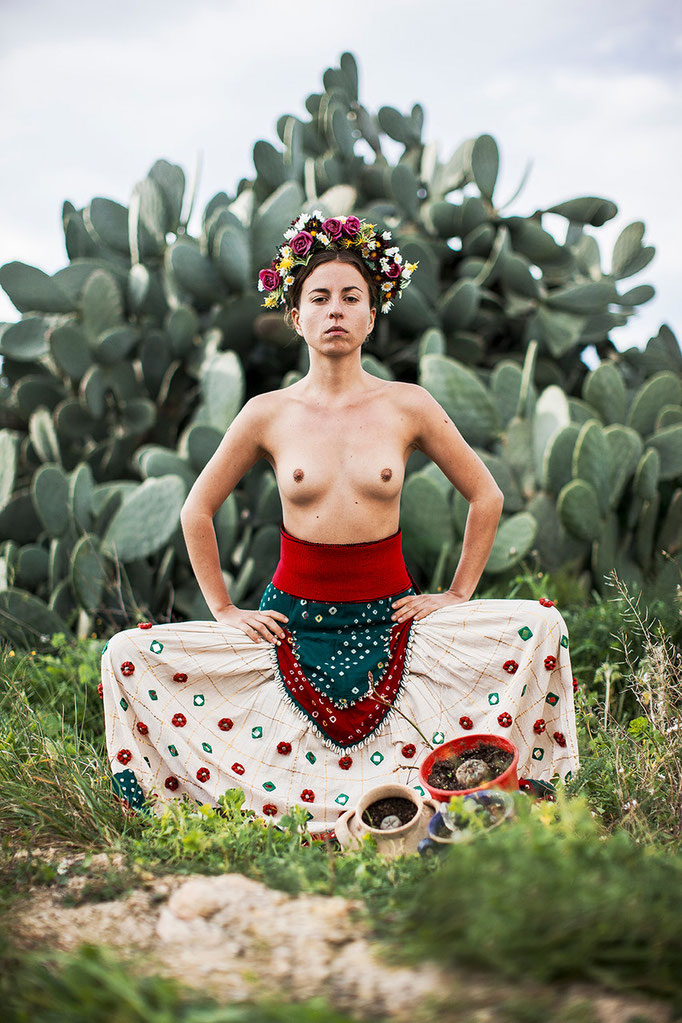
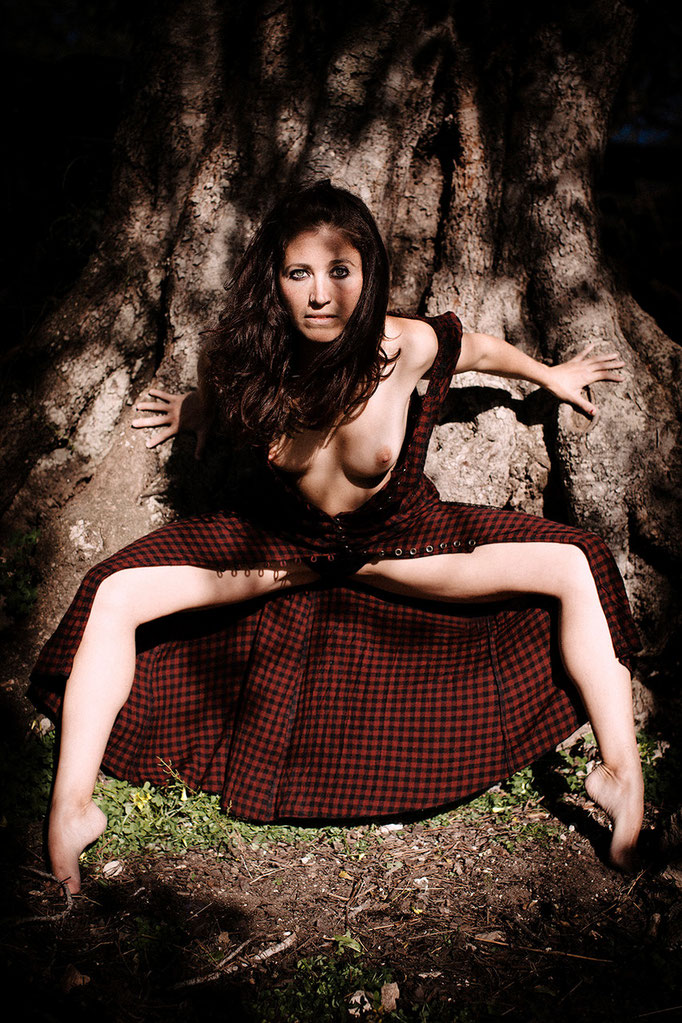
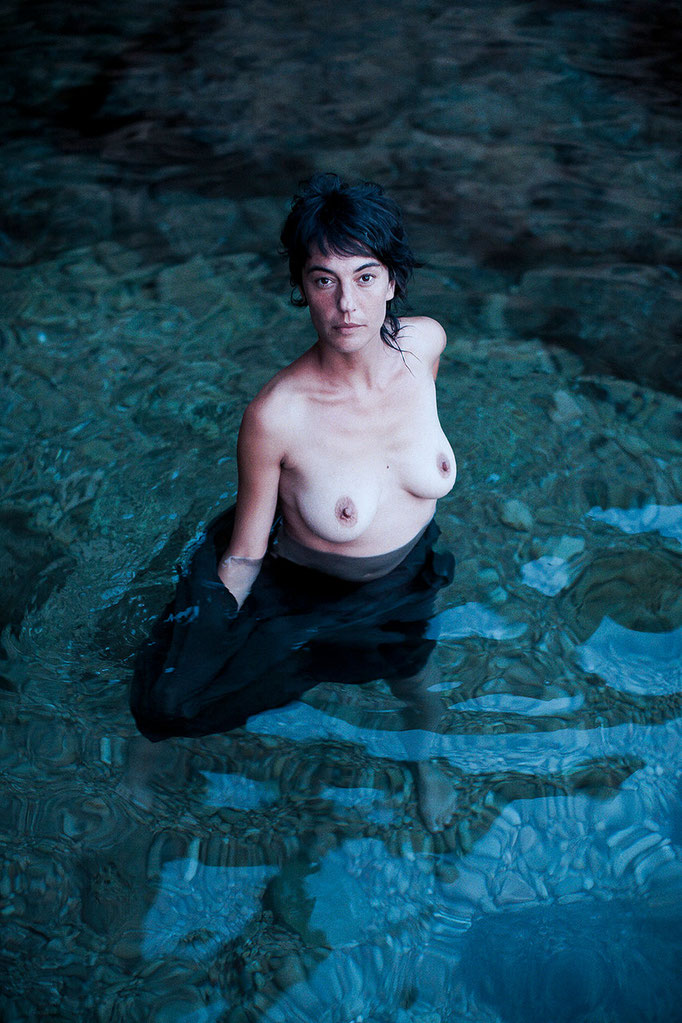
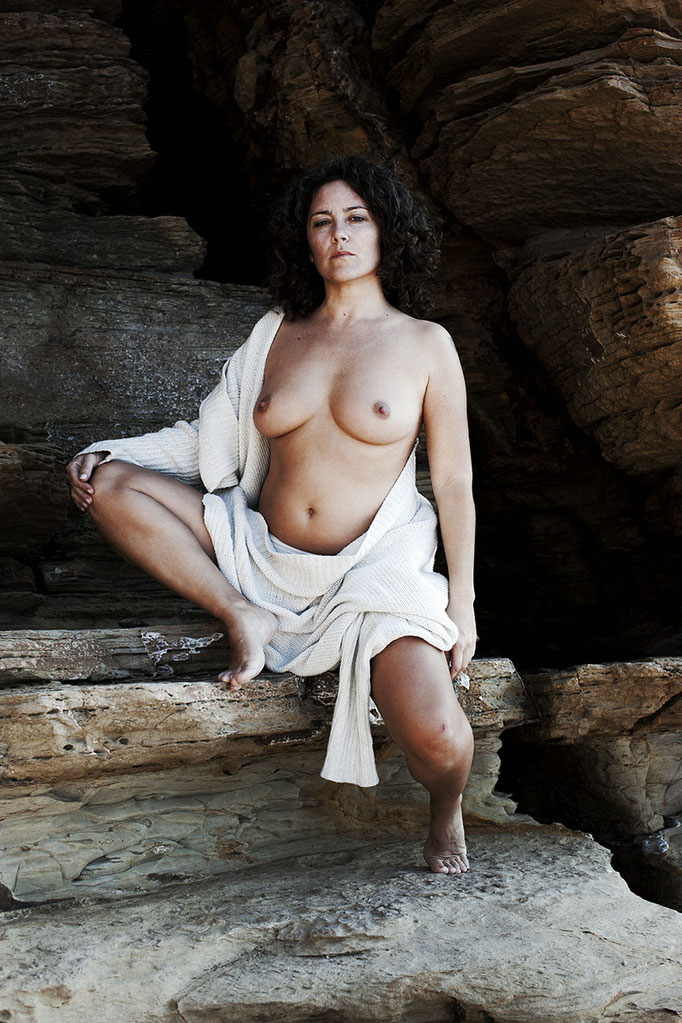
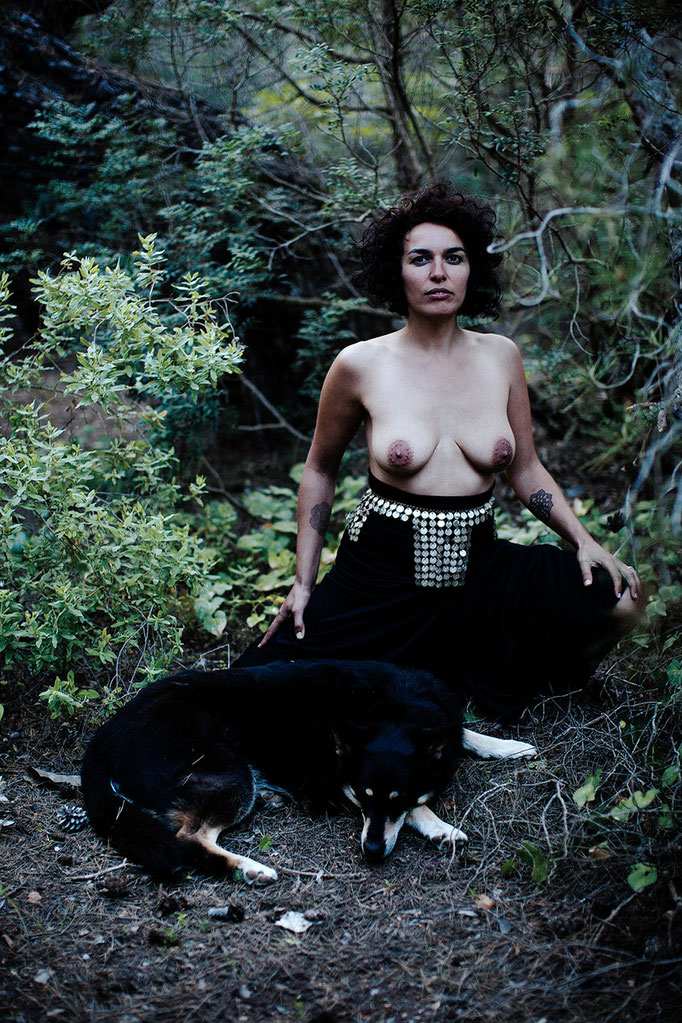
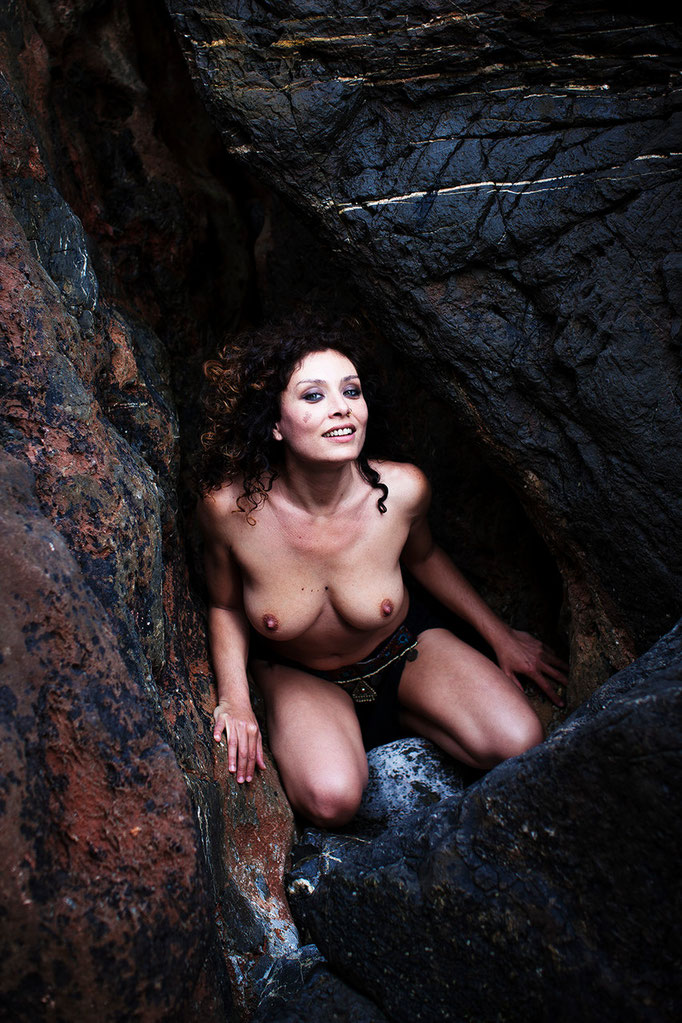
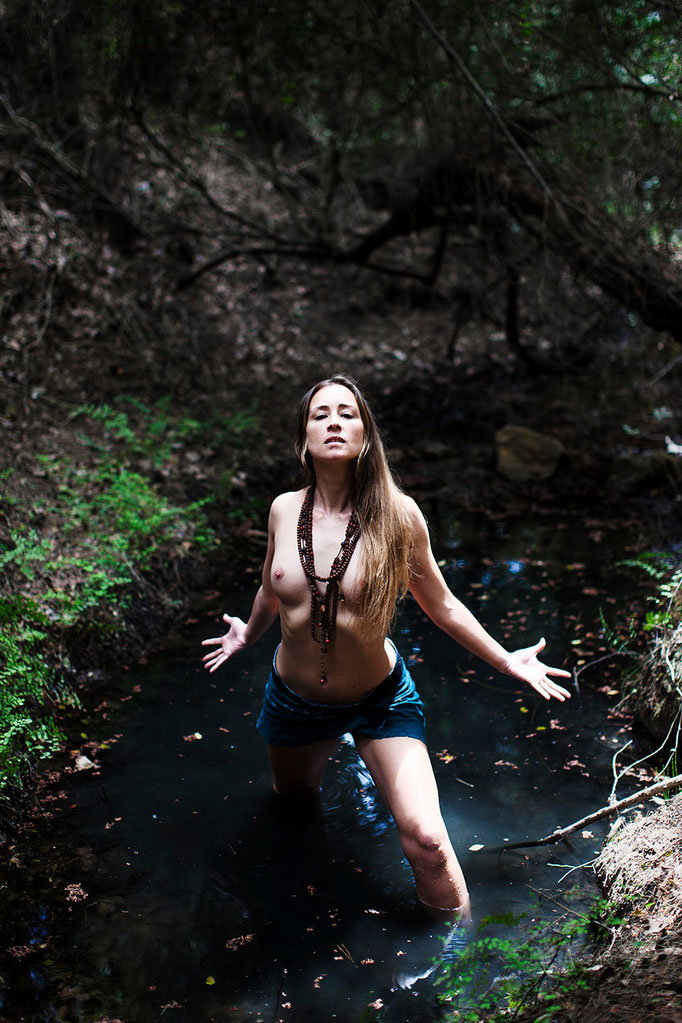
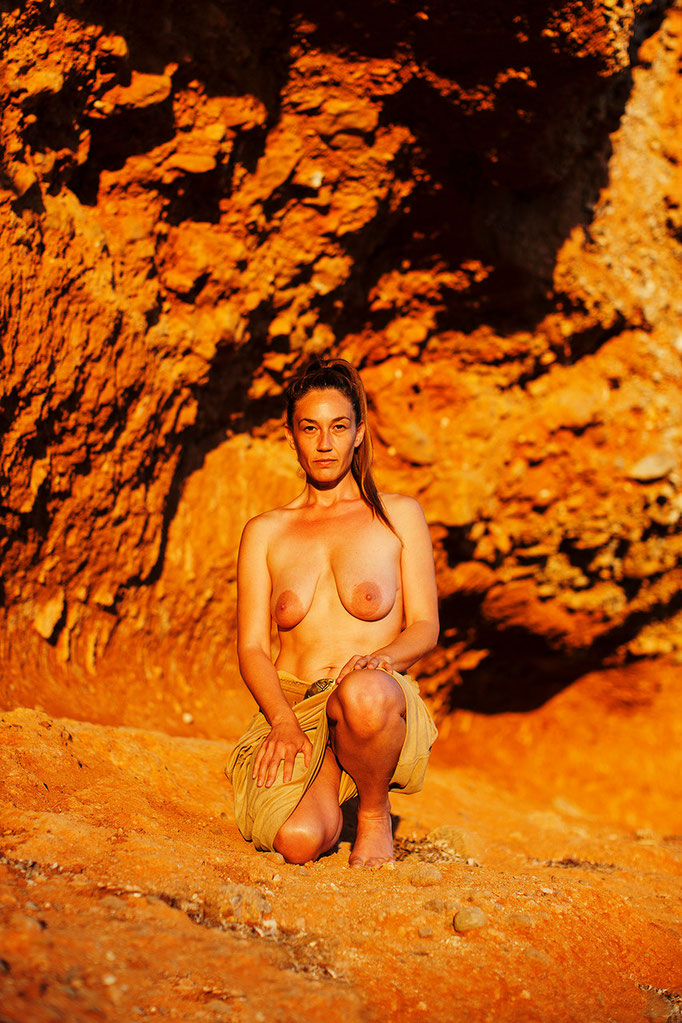
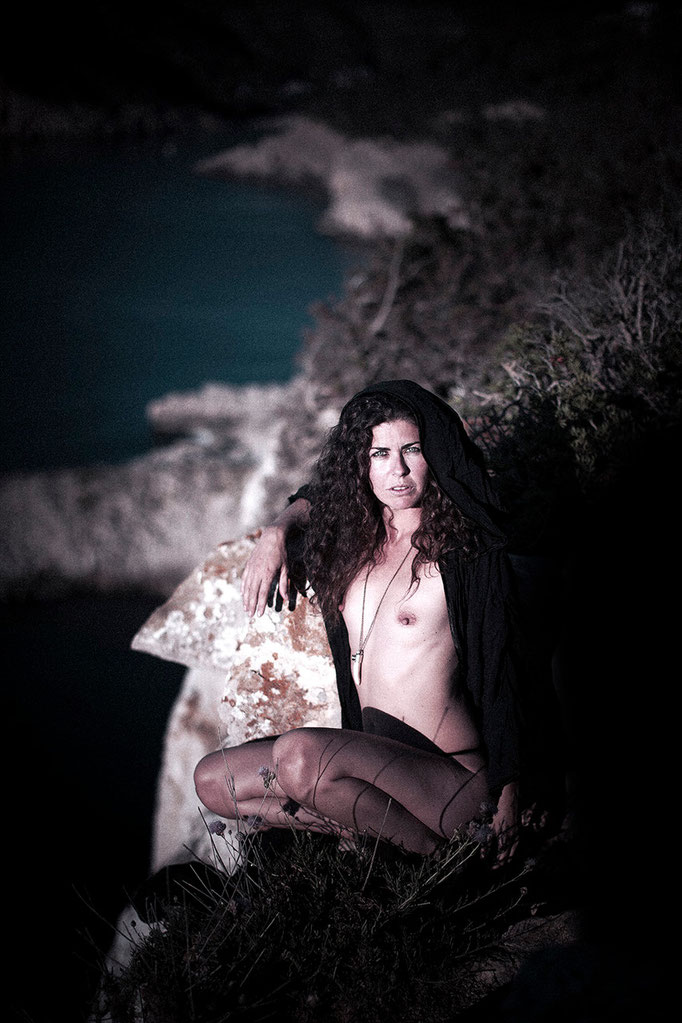
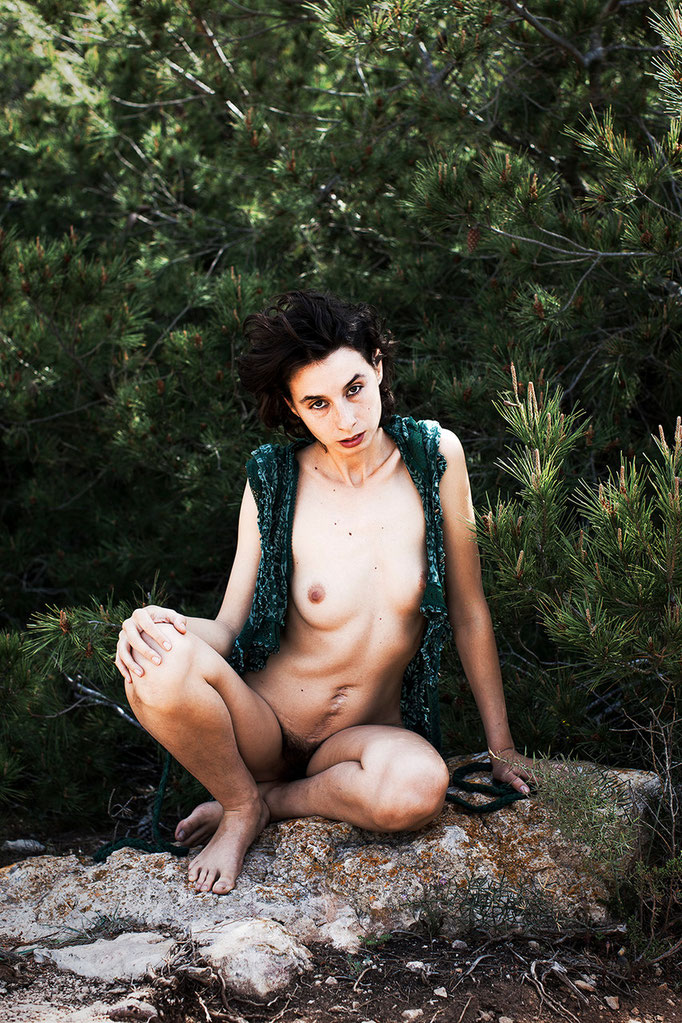
Esta serie de fotografías muestra a mujeres de distintas procedencias, retratadas a plena luz del día en diversos emplazamientos naturales de la isla de Ibiza, al otro lado de la valla, donde se sitúan quienes se rebelan contra las diferentes formas de colonización. Cada imagen encierra una historia rotulada con sus nombres. Isa Sanz presenta una colección de registros donde estas mujeres, sin más atributos que su sola presencia, aparecen de cuerpo entero, siempre en un escenario recóndito pero abierto, con el pecho desnudo –expresión de libertad–, sin miedo a mostrar lo que tienen de vulnerables. Son retratos directos, con luz natural, sin artificios. Su pose es segura, de frente. Su mirada firme, directa. No son complacientes ni dóciles, quizá porque han sabido preservar el hilo que las conecta con su lado salvaje. Su genealogía se remonta hasta Lilith, Kali, Boudica, Sycorax, así como a una larga estirpe de brujas y sujetos femeninos, míticos o reales, que no se doblegaron a la dominación patriarcal ni a sus métodos disciplinarios.
Asumir la violencia política de las mujeres, tal como sugieren estos retratos, supone desafiar las construcciones sociales y culturales de sexo/género, pobladas de mitos y estereotipos, como la mística masculina de la violencia o el viejo enunciado de que las mujeres somos pacíficas por naturaleza, que solo han servido para perpetuar una posición subordinada [4].
Frente a la lógica capitalista, construida sobre la explotación de las mujeres y la naturaleza, el mito de la buena salvaje, señalado implícitamente en esta serie, se presenta como un arquetipo de la psique que reside en la fuerza interior y en la capacidad de la propia subjetividad para afirmar la fuerza vital, la autoestima y la libertad. Alicia H. Puleo apunta en este sentido que las buenas salvajes contemporáneas constituyen “un expediente crítico con funciones deslegitimadoras del complejo tecnocientífico occidental” [5], ofreciendo una alternativa civilizatoria no contaminada por la cultura patriarcal, por lo que es preciso descartar cualquier esencialismo.
Pese a estar investido de relaciones de poder, según el pensamiento foucaultiano, el cuerpo es un ser “multilingüe” [6]. Las indómitas de Isa Sanz se encuentran profundamente conectadas con él, igual que con la naturaleza que las respalda y cobija. Insumisas, combativas, lúcidas y conscientes, se presentan sin coraza, gozando del hecho de saberse desnudas, en calma, aprendiendo el no-miedo y afirmando su no-identidad libremente. Son mujeres de pie, erguidas, que subvierten tanto la feminidad normativa como el modelo de representación que ha dominado el gran relato de la Historia del Arte, al repetir hasta el infinito esa tipología iconográfica definida con acierto como “fenómeno de la mujer reclinada” [7].
No es la primera vez que esta artista dirige su objetivo hacia otras mujeres. La práctica del affidamento o sororidad es una constante en su forma de proceder, de modo que cada proyecto implica siempre un proceso de intercambio, complicidad y mutua confianza, como puso de manifiesto en “Buscadores de visión”, “Alma Máter”, “Las diosas en ti” o “Sangro, pero no muero”. Isa Sanz retrata personas que conoce y se autorretrata con ellas porque juntas tejen la urdimbre. La naturaleza se presta como anfitriona del encuentro, construyéndose como un campo de energías cruzadas.
Todas las fotografías que vertebran la serie comparten una serie de notas comunes; sin embargo, cada una de estas mujeres posee su propia resonancia. La autora devuelve la atención al singular para presentarlas en primera persona, sabiendo que no es fácil contar lo semejante. Firmemente asentadas en el espacio, las indómitas están presentes con todo su ser, son el centro de su propia narrativa, leales a sí mismas, dueñas de sus acciones y su jouissance. Ellas son su propio altar. Conocen su sombra, pero también su luz. Son ellas las que miran, así que no procede la mirada voyeur. Lo significativo aquí es el reconocimiento que, volviendo a la RAE, es la acción y el efecto de reconocer o reconocerse.
Marta Mantecón. Historiadora del Arte.
[1] Chantal Maillard: La mujer de pie. Galaxia Gutenberg, Barcelona, 2015.
[2] Ibídem. p. 70.
[3] Jana Leo de Blas: El viaje sin distancia. Perversiones del tiempo, el espacio y el dinero ante el límite en la cultura contemporánea. CENDEAC, Murcia, 2006. p. 276.
[4] “La lucha por la ciudadanía descansa sobre la base de que las mujeres son seres políticos, no naturales”. Cf. María Xosé Agra Romero: “Con armas, como armas: la violencia de las mujeres”. Isegoría. Revista de Filosofía Moral y Política, nº 46, enero-junio 2012. p. 52.
[5] Alicia H. Puleo: “Madre-Naturaleza y la buena salvaje en la crítica ecológica e indigenista”, en Feminismo y Multiculturalismo. Instituto de la Mujer, Madrid, 2007. pp. 234.
[6] Clarissa Pinkola Estés: Mujeres que corren con los lobos. Ediciones B, Barcelona, 2001. p. 163.
[7] “Con esta expresión aludo a la proliferación de figuras femeninas que se asemejan por su aire de nonchalance, que imprime claramente el cuerpo tumbado, acostado, echado, recostado, o inmerso en la molicie para disfrute del autor de la obra y, se supone también del espectador”. Cf. Juan Vicente Aliaga: Orden fálico. Androcentrismo y violencia de género en las prácticas artísticas del siglo XX. Akal, Madrid, 2007. p. 29.
Critical text on the series:
INDOMITES
Everything that bends surrenders or humbles itself. So get a grip on yourself.
Chantal Maillard [1]
The RAE defines as indomitable, ta. (from the Latin, indomĭtus) one who cannot or will not be tamed. "Amaestrar", which in French is translated as élever, literally means "to elevate". The verb is also used in the sense of "to educate", but in both cases it is a matter of elevating the supposedly inferior, argues Chantal Maillard [2]. If the natural is that which cannot be controlled, the domestic, as Jana Leo states, "does not refer to the space that belongs to us, but to the one we belong to; it is not the space of our dominion, but the one that dominates us but over which we have some control: we know how it operates, that it is regulated and that it has times, repetitions and rhythms" [3]. Indomitable is, therefore, the person who resists the process of domestication, including the whole repertoire of normalized behaviors that such a regime brings with it.
This series of photographs shows women from different backgrounds, portrayed in broad daylight in various natural locations on the island of Ibiza, on the other side of the fence, where those who rebel against the different forms of colonisation are situated. Each image contains a story labelled with their names. Isa Sanz presents a collection of registers in which these women, with no other attributes than their mere presence, appear full-length, always in a hidden but open setting, bare-chested - an expression of freedom -, unafraid to show their vulnerability. They are direct portraits, with natural light, without artifice. Their pose is confident, straight ahead. Their gaze is firm, direct. They are neither complacent nor docile, perhaps because they have managed to preserve the thread that connects them with their wild side. Their genealogy goes back to Lilith, Kali, Boudica, Sycorax, as well as a long line of witches and female subjects, mythical or real, who did not bow to patriarchal domination or its disciplinary methods.
Taking on women's political violence, as these portraits suggest, involves challenging social and cultural constructions of sex/gender, populated by myths and stereotypes, such as the masculine mystique of violence or the old statement that women are naturally peaceful, which have only served to perpetuate a subordinate position [4].
In the face of capitalist logic, built on the exploitation of women and nature, the myth of the good savage, implicitly pointed out in this series, is presented as an archetype of the psyche that resides in inner strength and in the capacity of subjectivity itself to assert vital force, self-esteem and freedom. Alicia H. Puleo points out in this sense that the good contemporary savages constitute "a critical dossier with delegitimising functions of the western techno-scientific complex" [5], offering a civilising alternative uncontaminated by patriarchal culture, for which any essentialism must be discarded.
Despite being invested with relations of power, according to Foucauldian thought, the body is a "multilingual" being [6]. Isa Sanz's indomitable women are deeply connected to it, as they are to the nature that supports and shelters them. Insubmissive, combative, lucid and conscious, they present themselves without armour, enjoying the fact of knowing that they are naked, calm, learning non-fear and freely affirming their non-identity. They are standing, erect women who subvert both normative femininity and the model of representation that has dominated the great narrative of the History of Art, by repeating ad infinitum that iconographic typology aptly defined as the "phenomenon of the reclining woman" [7].
This is not the first time that this artist has turned her attention to other women. The practice of affidamento or sorority is a constant in her way of proceeding, so that each project always involves a process of exchange, complicity and mutual trust, as she showed in "Vision Seekers", "Alma Máter", "The goddesses in you" or "I bleed, but I don't die". Isa Sanz portrays people she knows and portrays herself with them because together they weave the warp. Nature lends itself as a host for the encounter, constructing itself as a field of crossed energies.
All the photographs that form the backbone of the series share a number of common notes; however, each of these women has her own resonance. The author returns the attention to the singular to present them in the first person, knowing that it is not easy to recount the similar. Firmly grounded in space, the indomitable women are present with their whole being, the centre of their own narrative, loyal to themselves, masters of their actions and their jouissance. They are their own altar. They know their shadow, but also their light. They are the ones who look, so there is no voyeuristic gaze. What is significant here is recognition which, to return to the RAE, is the action and effect of recognising or recognising oneself.
Marta Mantecón. Art Historian.
[1] Chantal Maillard: La mujer de pie. Galaxia Gutenberg, Barcelona, 2015.
[2] Ibid. p. 70.
[3] Jana Leo de Blas: El viaje sin distancia. Perversiones del tiempo, el espacio y el dinero ante el límite en la cultura contemporánea. CENDEAC, Murcia, 2006. p. 276.
[4] "The struggle for citizenship is based on the idea that women are political beings, not natural beings". Cf. María Xosé Agra Romero: "Con armas, como armas: la violencia de las mujeres". Isegoría. Revista de Filosofía Moral y Política, nº 46, January-June 2012. p. 52.
[5] Alicia H. Puleo: "Madre-Naturaleza y la buena salvaje en la crítica ecológica e indigenista", in Feminismo y Multiculturalismo. Instituto de la Mujer, Madrid, 2007. pp. 234.
[6] Clarissa Pinkola Estés: Women who run with the wolves. Ediciones B, Barcelona, 2001. p. 163.
[7] "With this expression I allude to the proliferation of female figures that resemble each other in their air of nonchalance, which clearly imprints the body lying down, lying down, lying down, lying down, or immersed in the molicie for the enjoyment of the author of the work and, it is assumed, also of the spectator". Cf. Juan Vicente Aliaga: Orden fálico. Androcentrismo y violencia de género en las prácticas artísticas del siglo XX. Akal, Madrid, 2007. p. 29.