
SANGRO, PERO NO MUERO

Fotografía y videoarte

2007-2009


Texto crítico sobre la serie:


SANGRO, PERO NO MUERO


“Mi arte se basa en la creencia de una energía universal que corre a través de todas las cosas: del insecto al hombre, del hombre al espectro, del espectro a las plantas, de las plantas a la galaxia. Mis obras son las venas de irrigación de este fluido universal. A través de ellas asciende la savia ancestral, las creencias originales, la acumulación primordial, los pensamientos inconscientes que animan el mundo. No existe un pasado original que se deba redimir: existe el vacío, la orfandad, la tierra sin bautizo de los inicios, el tiempo que nos observa desde el interior de la tierra. Existe por encima de todo, la búsqueda del origen”.


Ana Mendieta (1983)[1]


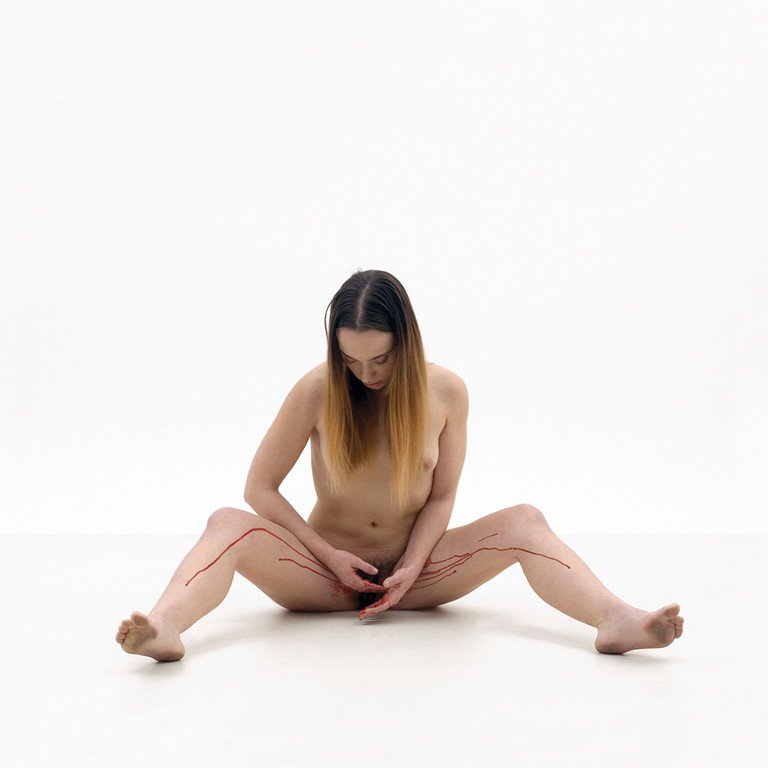
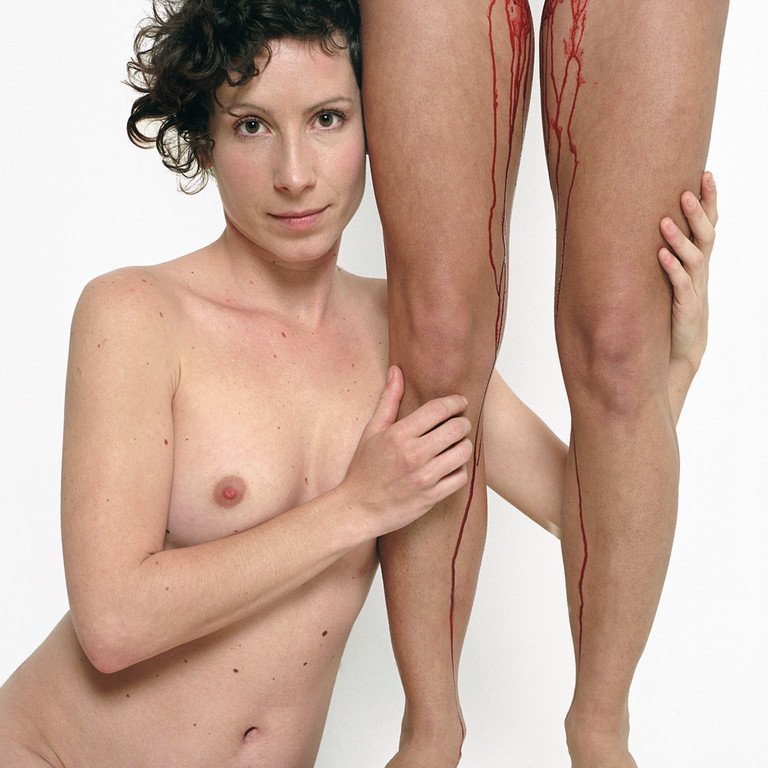
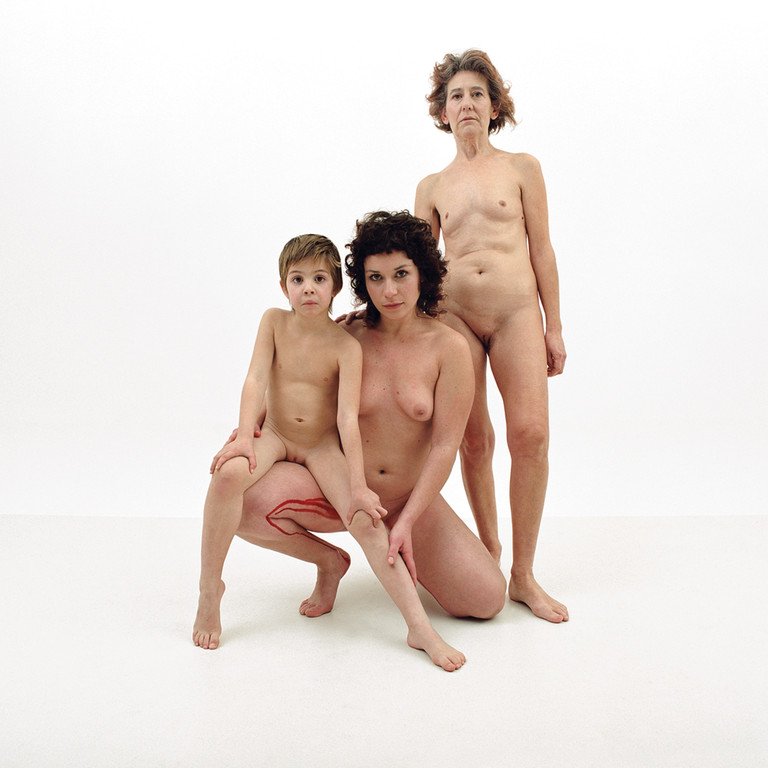
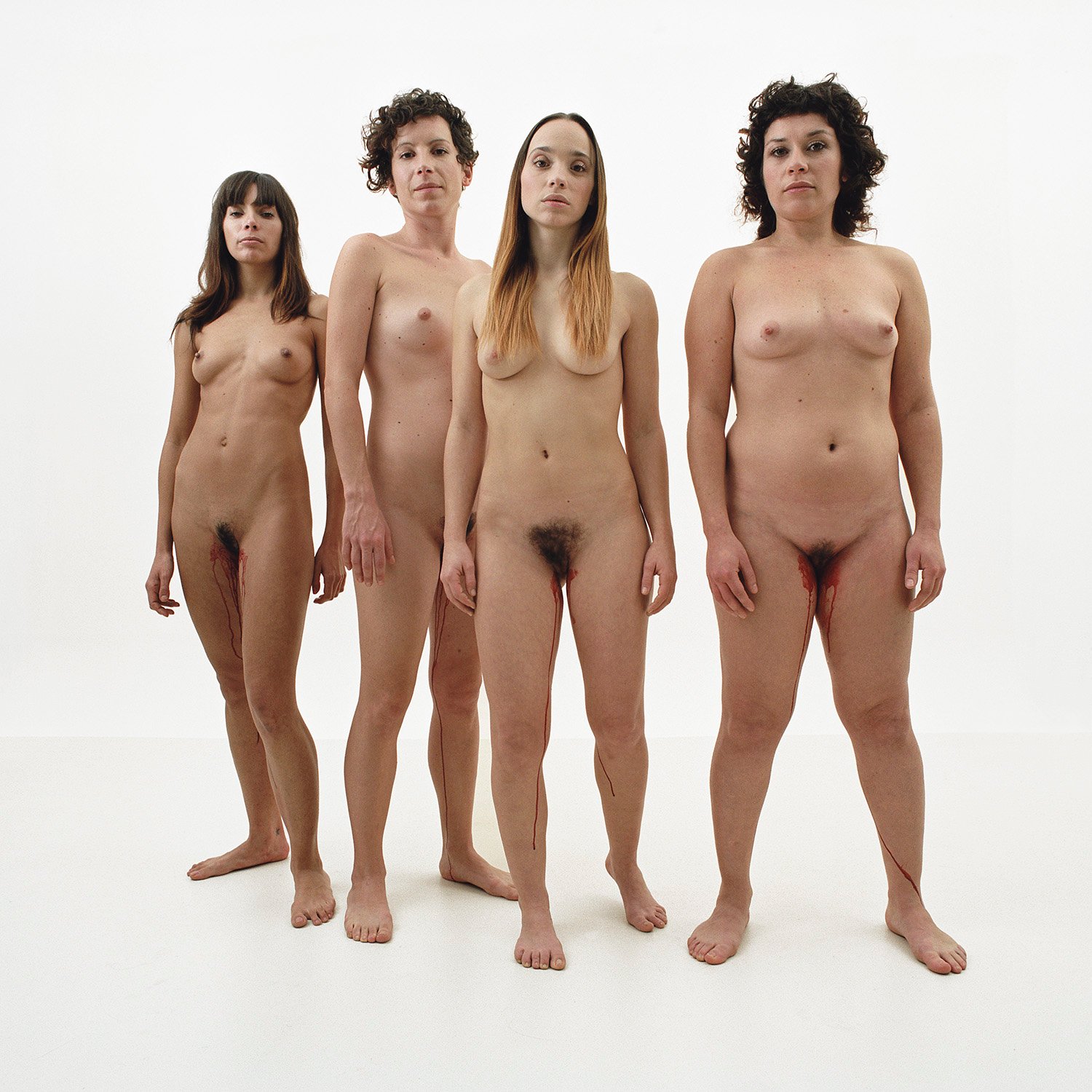
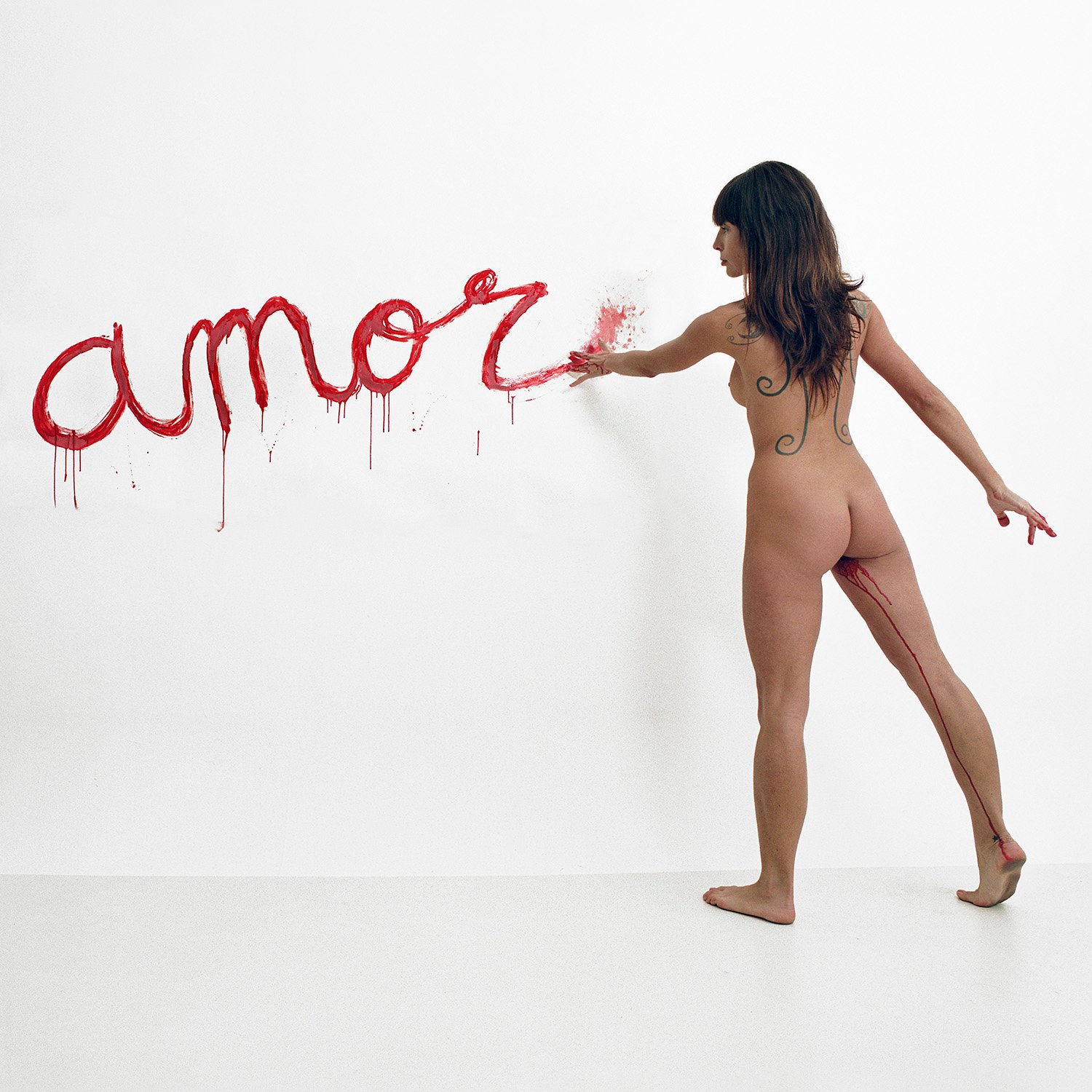
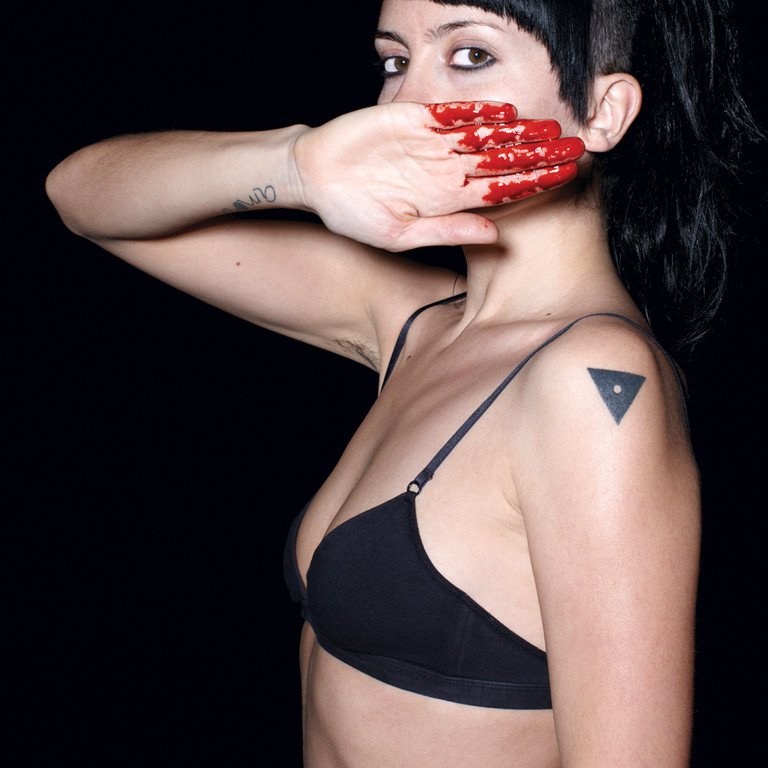
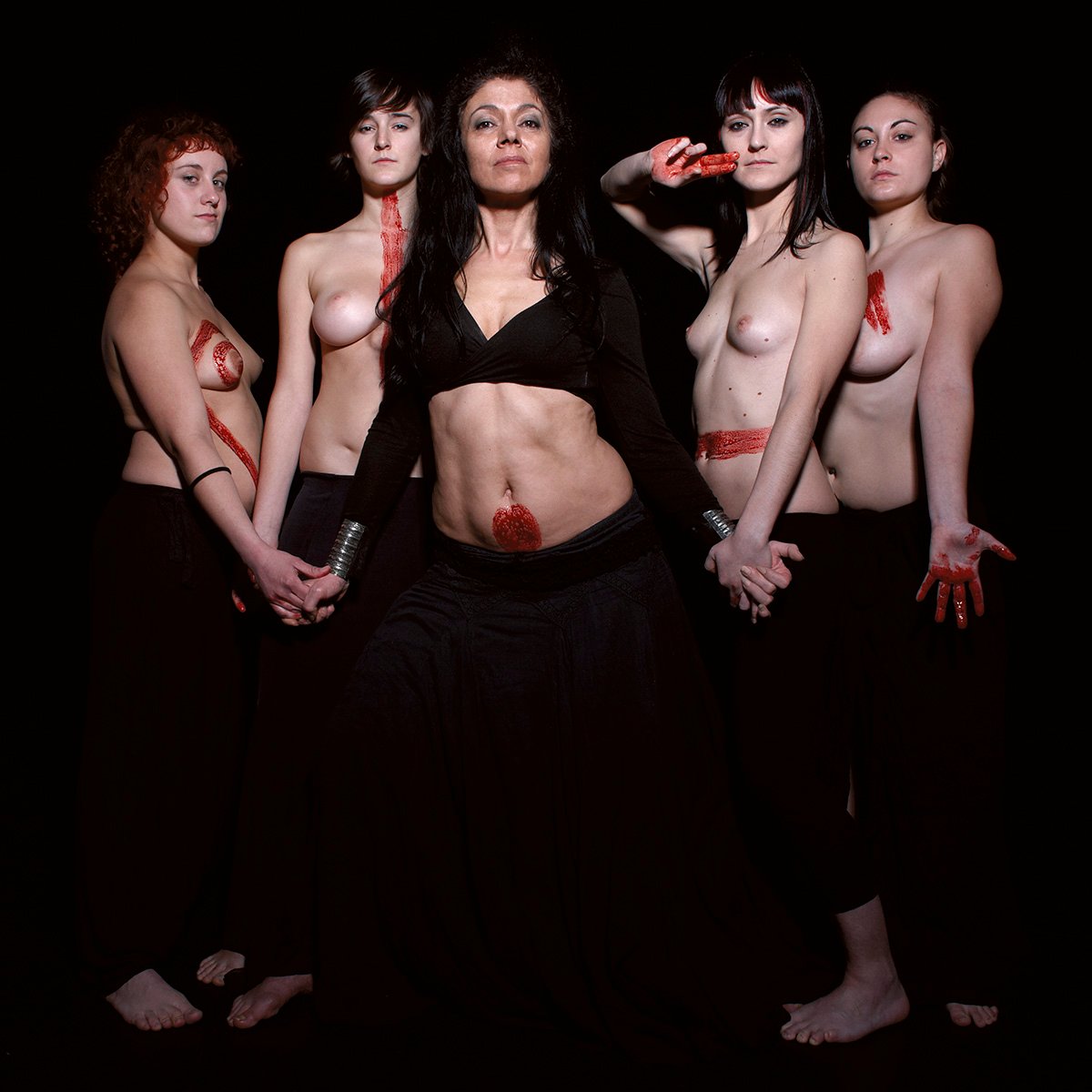
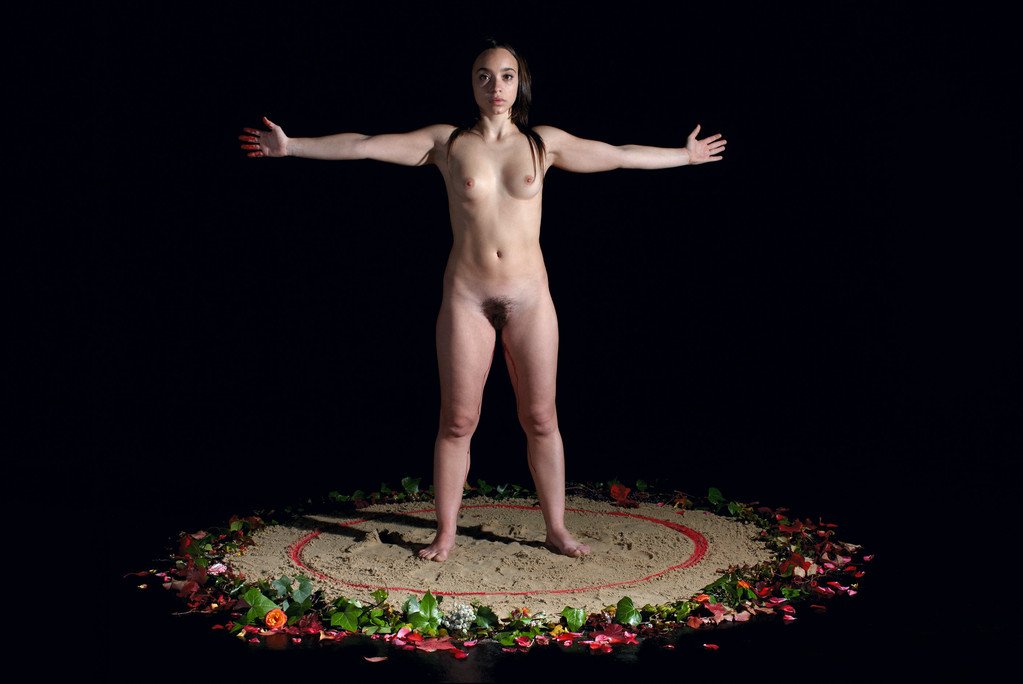
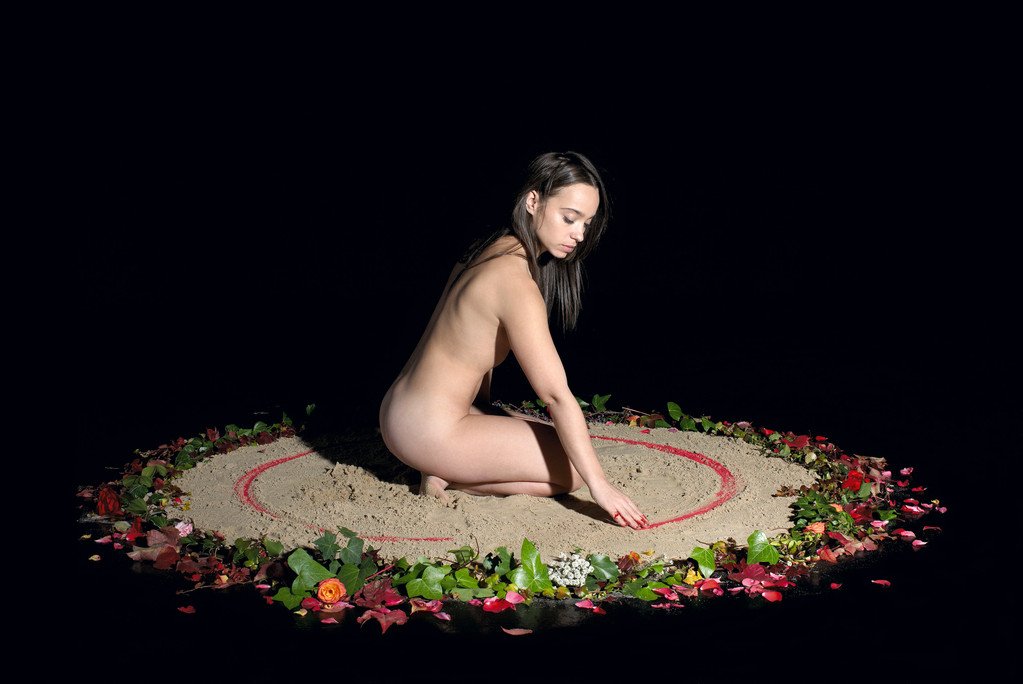
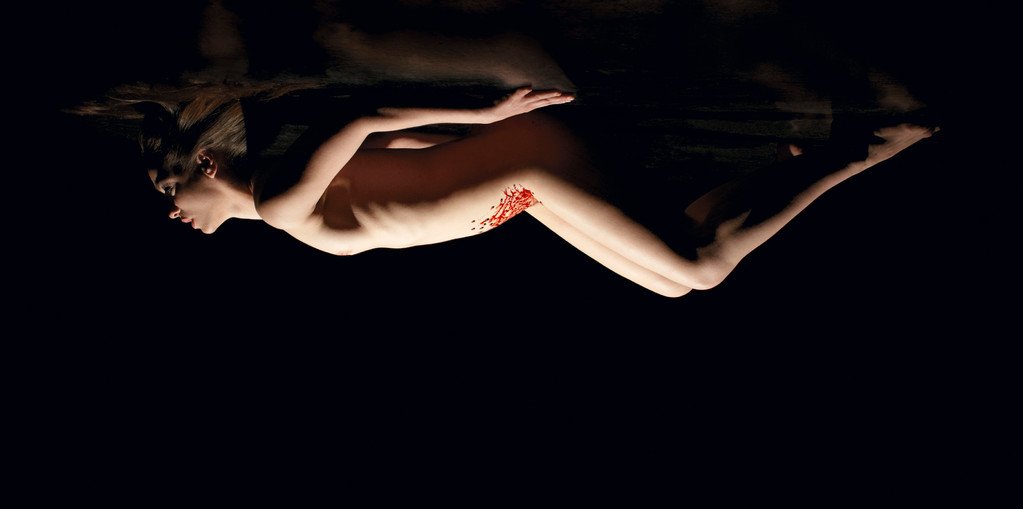
Las imágenes que ilustran este catálogo muestran a una serie de mujeres, solas o acompañadas por otras mujeres de diferentes edades, sobre fondos neutros, desnudas. Cada una de ellas se hace visible en el espacio público a través de la fotografía o el vídeo, pero también da a ver una parcela de su intimidad: la sangre menstrual que fluye por sus piernas o señala, como un simbólico bindu, distintas partes de su cuerpo.


La menstruación ha sido -y sigue siendo todavía- una construcción biocultural objeto de múltiples interpretaciones, tanto de signo positivo como negativo, a lo largo de la historia. Cada sociedad ha generado su propio sistema de creencias, mitos y ritos, acerca de su naturaleza, moviéndose casi siempre entre lo sagrado y lo tabú. La sangre, fuente de toda clase metáforas y simbolizaciones, posee para muchas culturas matices rituales y atribuciones mágicas, como expresión de la vida y de la muerte; sin embargo, también ha sido empleada durante siglos para representar el dolor y la violencia en todas sus vertientes, especialmente la ejercida contra las mujeres. Las tecnologías de control se manifiestan en el cuerpo y, por consiguiente, en la consideración acerca de la sangre que, según Foucault, ha sido un elemento determinante en los mecanismos del poder, en sus manifestaciones y en sus rituales: “El poder la dibuja, la suscita y utiliza como el sentido proliferante que siempre hay que mantener bajo control para que no escape”[2]. Así, el Antiguo Testamento convierte el líquido menstrual en signo de impureza que concierne por igual a todas las hijas de Eva: “Cuando la mujer tuviere flujo de sangre, y su flujo fuere en su cuerpo, siete días estará apartada; y cualquiera que la tocare será inmundo hasta la noche” (Levítico, 15:19).


Pese a que creencias como ésta han pervivido hasta relativamente poco tiempo en nuestra cultura, la sangre que aparece en el proyecto “Sangro pero no muero” de Isa Sanz -la única derramada de manera natural por el cuerpo, explica la artista-, constituye una fuerza positiva que conecta a las mujeres con el infinito proceso de transformación de la naturaleza (regeneración), donde el tiempo cíclico sustituye al tiempo lineal. Expresa la noción de renacimiento y muerte, sintonizando con el origen (el útero materno) y con todas las manifestaciones primitivas de lo femenino situadas en el ámbito de lo prelingüístico y, por tanto, no contaminadas por la cultura. Hélène Cixous refiere que la escritura femenina posee ecos del pre-lenguaje: “Su libido es cósmica, del mismo modo que su inconsciente es mundial”, de modo que dicha escritura “no puede sino proseguir, sin jamás inscribir ni discernir límites”[3]. La sangre menstrual es el lenguaje que utiliza la artista para expresar el vínculo de la mujer con la naturaleza viva, a través de su periódica travesía más allá de la frontera del cuerpo para encarnar el ritmo de Gaia, diosa madre o Tierra, repitiéndose al compás de la Luna. Así lo certifican los versos que recita el coro de voces femeninas del vídeo Sangramos pero no morimos:


Provengo del útero universal

sangro pero no muero

Y en un infinito ciclo de vida-muerte-vida

sangro pero no muero

Resurjo

sangro pero no muero

El fluido es la llave de la morada oscura

sangro pero no muero

Donde se gesta la mutación.


La genealogía de este trabajo, de raíz performativa, tiene su punto de partida en algunos episodios ya históricos del arte feminista; si bien es cierto que la representación de la sangre es una constante en la historia del arte, empezando por toda la iconografía del dolor vinculada a las imágenes religiosas de mártires y siguiendo con las dramáticas composiciones de historia del mundo contemporáneo. En el siglo XX, autores como Marcel Duchamp, Piero Manzoni o Andy Warhol comenzarán a introducir en el arte referencias, más o menos explícitas, a determinados fluidos y excreciones corporales. Los accionistas vieneses, con su “dramaturgia del exceso”, dotarán a estas sustancias de una dimensión ritual y, sin embargo, profundamente desacralizada y provocativa. También artistas como Vito Acconci, Michel Journiac, Robert Mapplethorpe, Andrés Serrano, Helen Chadwick, Cindy Sherman, Kiki Smith, Mike Kelley, Ron Athey y un cada vez más largo etcétera, recurrirán a la sangre, el semen, la orina o los excrementos para articular algunas de sus piezas más conocidas, con discursos de muy distinto signo, despertando todo tipo de reacciones en el público.


La representación de fluidos corporales hace que el arte penetre en la categoría estética de lo abyecto, formulada por Julia Kristeva en su célebre ensayo. Cuando lo que debiera estar dentro del cuerpo, donde solemos situar todo aquello que conforma al individuo (la piel y los orificios corporales son sus bordes), sale hacia fuera -y, con ello, todo lo reprimido, las pulsiones ocultas y los deseos libidinales-, lo que antes era sujeto se transforma en objeto (la naturaleza ingresa en el territorio de la cultura). Consecuentemente el yo, que se ve enfrentado a su condición vulnerable, pierde su unidad, produciéndose una honda perturbación identitaria donde la repulsión se da cita con el deseo. Lo real entra de este modo en escena, colapsando nuestra visión. En este sentido, la sangre menstrual ha sido interpretada como un objeto contaminante situado en los bordes del cuerpo -la vulva como herida abierta- que representa, en palabras de Julia Kristeva, “el peligro proveniente del interior de la identidad (social o sexual)” y amenaza “la relación entre los sexos en un conjunto social y, por interiorización, la identidad de cada sexo frente a la diferencia sexual”[4]. Este hecho provocó la necesidad de imponer el distanciamiento de la higiene en las representaciones del cuerpo femenino. El cuerpo de la mujer, pulcro e inmaculado, se convertía en el terreno sobre el cual había de erigirse el patriarcado, por lo que era preciso ocultar todo aquello que debiera permanecer dentro, prefijado e inmóvil, igual que la noción de identidad que la iglesia y y otras esferas de poder han querido imponer.


Uno de los propósitos del arte feminista fue precisamente debilitar estos límites y el rechazo a la sangre menstrual era una de ellos. Luce Irigaray abogó por una creatividad femenina que presentara el cuerpo de la mujer “no como materia pasiva, sino como el lugar donde el universo fue generado”, abandonando la idea de horror y repugnancia que asociamos a la frontera entre el cuerpo y lo otro para pensar en ella “como algo que proporciona una espléndida apertura a una nueva forma de identidad-construcción: una hembra divina”[5]. Las aportaciones más significativas a este respecto fueron planteadas por una serie de mujeres artistas que decidieron cuestionarse la ortodoxia del arte occidental (esencialmente greenbergiano) y el paradigma androcéntrico de la cultura, para ofrecer nuevas alternativas que incidieran en lo procesual y en la consideración de nuevos materiales, como el cuerpo y sus fluidos o la naturaleza. Artistas como Judy Chicago, Carol Schneemann, Gina Pane y Ana Mendieta, entre otras, utilizaron la sangre como forma simbólica de escritura. Lo íntimo adquiría una dimensión pública y la obra, en una subversión de carácter positivo, se articulaba a partir de nuevos significados. El cuerpo femenino se transformaba en un territorio de representación y lucha política, en un espacio de construcción identitaria donde la mujer se administraba sus propias autodesignaciones y predicados, además de revelar las diferencias y las voces silenciadas de ciertas minorías que se salían del canon hegemónico, incorporando formas de cultura alejadas de la ortodoxia capitalista occidental. Pero si bien es cierto que la experiencia de lo femenino está estrechamente vinculada al cuerpo, tal como sugiere la profesora Hillary Robinson, conviene tener presente que “lo femenino no pertenece esencialmente al cuerpo”, sino que “el cuerpo y la representación son sus intermediarios”[6].


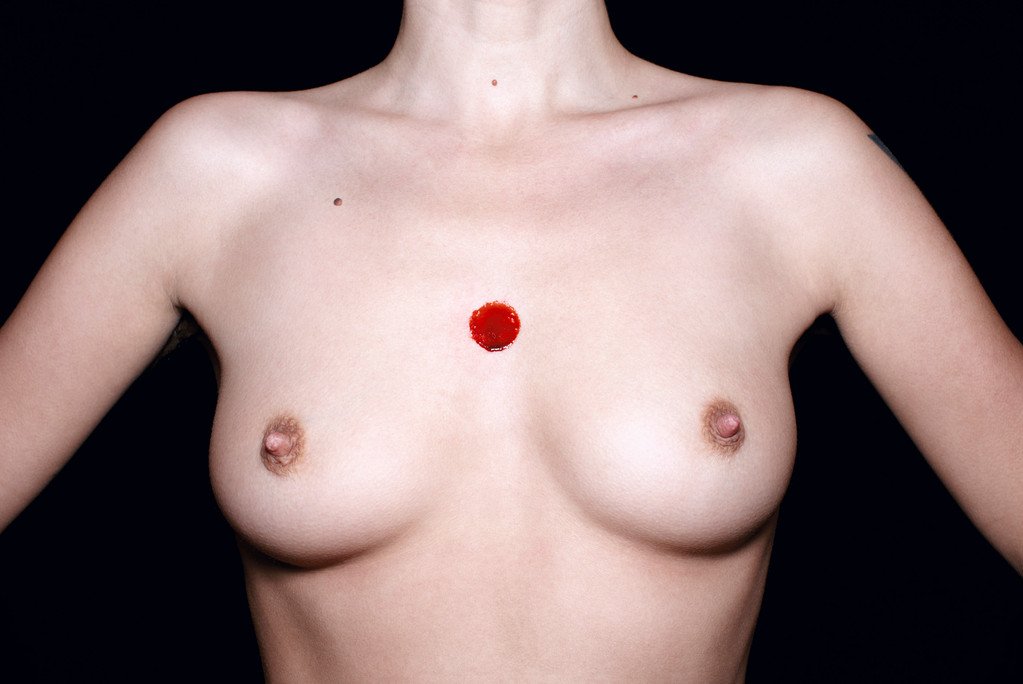
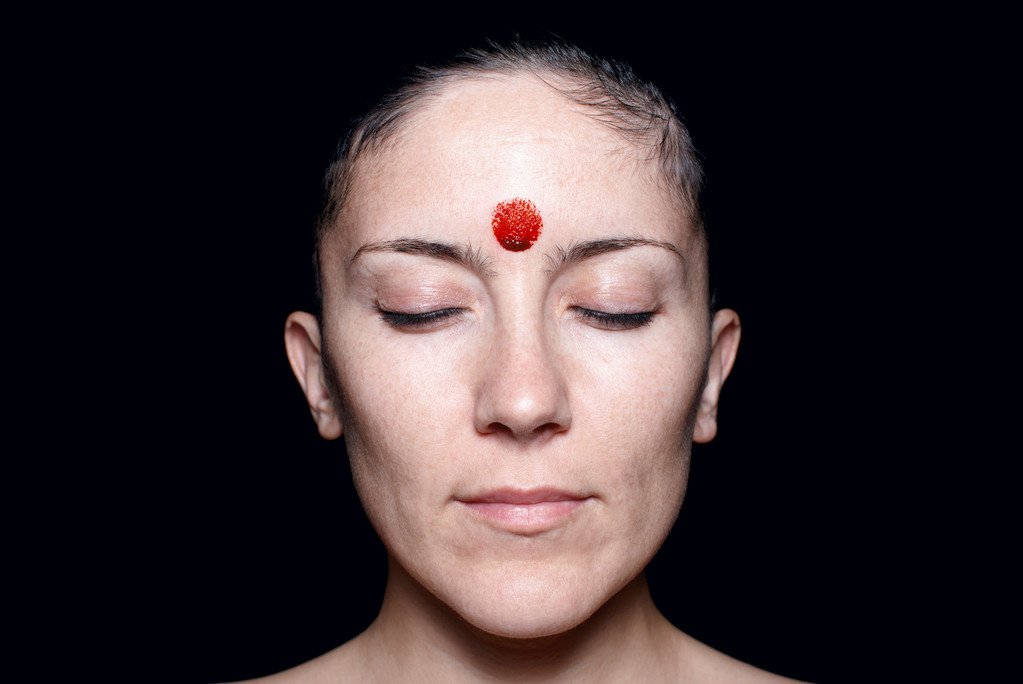
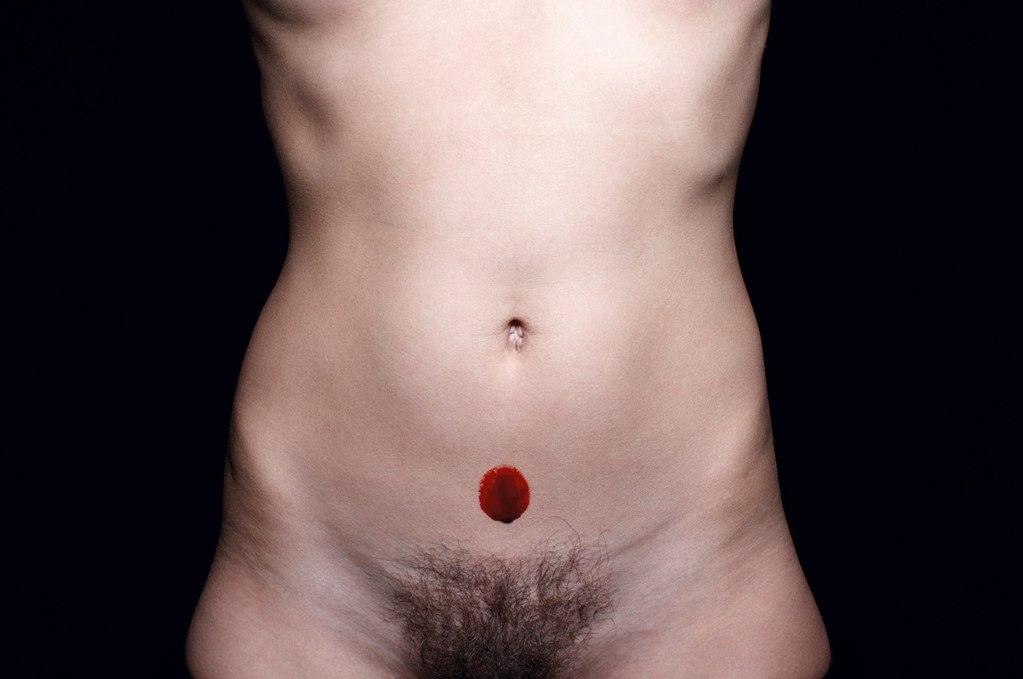
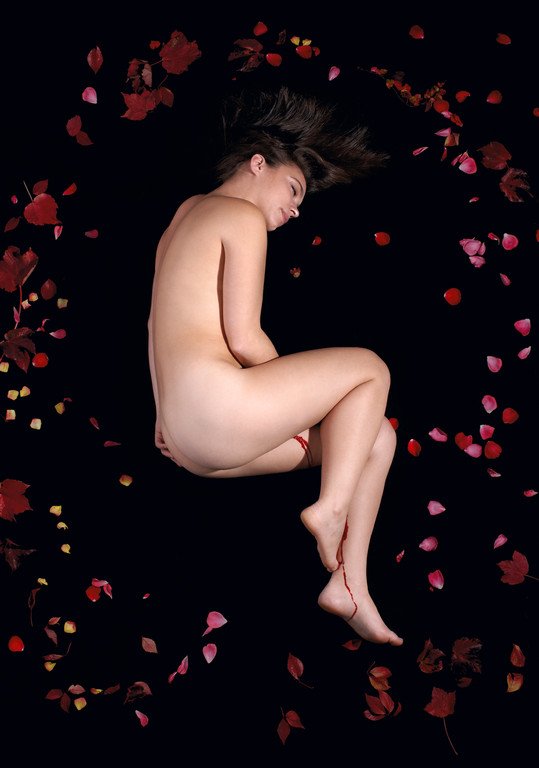
Hacer visible la sangre que fluye libremente por el cuerpo femenino, tal como Isa Sanz plantea en su propuesta, sigue siendo un acto político y, a la vez, poético. Frente a la escisión identitaria de lo abyecto, el líquido menstrual se convierte en pigmento que encarna el valor creativo de las mujeres. En varias imágenes, señala en forma de punto o gota (bindu) algunos chakras o centros de energía del cuerpo: el ajana (el tercer ojo), el anahata (en el corazón) y el svadhisthana (junto al pubis). La propia artista se autorretrata mostrando abiertamente la sangre entre sus dedos. En otra fotografía, vemos a una mujer que escribe AMOR en una pared, mientras la sangre de la menstruación resbala por sus piernas. Con esta palabra, restablece el vínculo con su propia naturaleza, con el origen de la vida, con la fuente materna. Ana Mendieta también dejó escrito en sangre: She got love. La artista cubana supo expresar como nadie la relación entre el cuerpo femenino y el ciclo natural de vida y muerte en constante renovación: “Me convierto en una extensión de la naturaleza y la naturaleza en una extensión de mi cuerpo. Este acto obsesivo de reafirmar mis lazos con la tierra es realmente la reactivación de creencias primitivas… [en] una fuerza femenina omnipresente, la imagen que permanece tras haber estado rodeada por el vientre materno, es una manifestación de mi sed de ser”[7]. Isa Sanz, heredera de este sentimiento, representa en varias fotografías el regreso de la mujer a la matriz, simbolizada en una espiral o circunferencia construida con arena, vegetación y pétalos de flores, posiblemente como alusión a su poder transformador, pero también como huella del paraíso (espacio donde vivía antes de entrar en el Hades, por haber gozado de su propio cuerpo). Somete la abyección del fluido menstrual a una labor de alquimia donde lo obsceno se torna en algo natural, lo impuro en algo limpio, lo desagradable en algo hermoso.


Isa Sanz explora el vínculo mujer/mujer; un lazo que, hasta hace no mucho tiempo, se consideraba, cuanto más estrecho e intenso, más subversivo. En “Sangro pero no muero”, cada mujer se busca en las demás, celebrando su identidad múltiple; “la maravilla de ser varias”, diría Hélène Cixous, “gozando de su don de alterabilidad”[8]Las mujeres, hermanas de sangre y, como tales, habitantes de una misma tribu, se encuentran conectadas por la misma experiencia. La sangre describe, como un yantra, el perpetuo tránsito de su ciclo que, igual que la construcción de la identidad, es siempre nómada. “Ella”, como apuntara lúcidamente la pensadora feminista Luce Irigaray, es indefinidamente otra en sí misma[9].


Marta Mantecón. Historiadora del arte y comisaria.


 [1]              Mendieta, Ana: “Escritos personales”, en Moure, Gloria (ed.): Ana Mendieta. Polígrafa, Barcelona, 1996. p. 216.

[2]              Foucault, Michel: Historia de la sexualidad I. La voluntad de saber. Siglo XXI, Madrid, 2006. pp. 156-157.

[3]              Cixous, Hélène: La risa de la medusa. Ensayos sobre la escritura. Anthropos, Barcelona, 2001. p. 49.

[4]              Kristeva, Julia: Poderes de la perversión. Siglo XXI, México, 1989. p. 96.

[5]              Battersby, Christine: “Embutir y nada más: Irigaray, pintura y psicoanálisis”, en Deepwell, Katy (ed.): Nueva crítica feminista de arte. Estrategias críticas. Cátedra, Madrid, 1998. pp. 234-235.

[6]              Robinson, Hillary: “Más allá de los límites: feminidad, cuerpo, representación”, en Deepwell, Katy, op. cit.,  p. 242.

[7]              Cfr. Ruido, María: Ana Mendieta. Nerea, Madrid, 2002. p. 67.

[8]              Cixous, Hélène, op. cit., p. 49.

[9]              Irigaray, Luce: Ese sexo que no es uno. Saltés, Madrid, 1981. p. 23.


Critical texts on the series:


I BLEED, BUT DO NOT DIE


“My art is grounded in the belief of one universal energy which runs through everything: from insect to man, from man to spectre, from spectre to plant, from plant to galaxy.

My works are the irrigation veins of this universal fluid. Through them ascend the ascentral sap, the original beliefs, the primordial accumulations, the unconscious thoughts that animate the world.

There is not original past to redeem: there is the void, the orphanhood, the unbaptized earth of the beginning, the time that from within the earth looks upon us. There is above all the search for origin”.


Ana Mendieta (1983)[1]


The artworks that picture this catalog show a group of women, alone or with other women being in different ages, naked over neutral backgrounds. Each of them becoming visible in the public space through photography or video, but also opening a part of their intimacy: the menstrual blood flowing through their legs or pointing out, like a bindu, some different parts of their body.


Menstruation has been -and still is- a biocultural construction object of many interpretations across history, as a positive sign as well as a negative one. Each society has created its own system of belief, myth and rite concerning its nature, and moving almost always between the sacred and the taboo. The blood, source of all kind of metaphors and symbolizations, has for many cultures, ritual nuances and magic attributions, like an expression of life and death; however, for centuries it has always been used to stand for pain and violence in all its sides, specially the one exerted against women. Control technologies become evident in the body, and therefore, in the consideration about the blood that according to Foucault has been a decisive element in power mechanisms, in its displays and rituals: “Power depicts it, arouses it and uses it as the proliferating sense that must be kept under control lets escape”[2]. Thus the Old Testament turns the menstrual liquid in an impure sign that concerns the same to all daughters of Eve: “And if a woman have an issue, and her issue in her flesh be blood, she shall be put apart seven days: and whosoever toucheth her shall be unclean until the even.”


Despite of beliefs like this, having survived till short time ago in our own culture, the blood appearing in the project “I bleed but I do not die” by Isa Sanz –the only one shed in a natural way by the body itself, the artist says-, creates a positive might that links women with the endless transformation process of nature (regeneration), where cyclical time replaces linear time. It expresses the idea of rebirth and death, being in tune with the origin (the mother womb), and with all the primitive signs of the feminine situated in the prelinguistics field, and therefore out of the corruption of culture. Hélène Cixous mentions that feminine writing has echoes of pre-language: “her libido is cosmic, the same way her unconscious is worldwide”, so that writing “cannot do anything but going on without never ever register nor discern limits”[3]. Menstrual blood is the language the artist uses to express the link between woman and living nature, through its periodical voyage, further away than the border of the body to embody the rhythm of Gaia, mother goddess or Earth, repeating in time to the Moon. The chorus of feminine voices on the video We bleed but do not die  certifies so:


I come, from the universal womb
I bleed but do not die
within a boundless cycle of life-death-life
I bleed but do not die
I reemerge
I bleed but do not die
fluid is the key to the dark dwelling
I bleed but do not die
where mutation gestates


The genealogy of this artwork, having a performative root, has its initial point in some already historic episodes of feminist art; although it is truth that blood representations in art history is a constant, beginning with all the iconography of pain being linked to the religious images of martyrs and following with the dramatic history works of contemporary world. In the 20th Century, some authors like Marcel Duchamp, Piero Manzoni or Andy Warhol, will start introducing in art some references, more or less explicit, to certain body fluids and excretions. Viennese Actionists with their ‘dramaturgy of excess”, will provide to this substances with a ritual dimension, but however deeply desacralized and provocative. Also artists as Vito Acconci, Michel Journiac, Robert Mapplethorpe, Andrés Serrano, Helen Chadwick, Cindy Sherman, Kiki Smith, Mike Kelley, Ron Athey and a long etcetera, will resort to blood, semen, urine or excrements to utter some of their most relevant artworks, with a treatise of different sign and arousing all kind of reactions to the public.


Representation of body fluids makes art sinking in the aesthetic category of the abject, formulated by Julia Kristeva in her famous essay. When everything that should be inside the body, where we usually locate what constitute the individual (the skin and the body orifices are its borders), comes out –and with this, all that is repressed, hidden psychosexual developments and libidinal desires-, what was subject before now becomes object (nature enters the territory of culture). Consequently the self that finds itself confronted to its vulnerable condition, loses its unity, producing a deep identity disturbance where repulsion meets desire. The real thing comes on stage collapsing our vision. Menstrual blood, in this sense, has been interpreted as a contaminant object located in the borders of the body -the vulva as an open wound- that symbolizes, according to Julia Kristeva, "the danger that comes from the inside of identity (social or sexual)" and threatens "the relationship between sexes in a social group, and by internalization, the identity of each sex against the sexual difference"[4]. This fact caused a need to impose a distancing from the hygiene while representing the feminine body. Woman's body, neat and immaculate, became the ground where the patriarchy should rise, that is why it was needed to hide all that was supposed to be kept inside, prefixed and still, the same that the idea of identity that the church and other spheres of power have wanted to impose.


One of the aims of the feminist art was precisely to weaken those limits, and the refusal of menstrual blood was one of them. Luce Irigaray defended a feminine creativity that showed the woman body "not like a passive matter, but like the place where inverse was generated",  leaving the idea of horror and revulsion that we associate to the border between the body and the other thing to think about it "as something that gives a magnificent opening to a new way of identity-construction: a divine female"[5]. The most meaningful contributions on this matter were brought out by a group of artists women, who decided to question the orthodoxy of western art (essentially greenbergian) and the androcentric paradigm of culture, to offer new alternatives which would insist in the processual and in the consideration of new materials, like the body and its fluids, or nature. Artists like Judy Chicago, Carol Schneemann, Gina Pane and Ana Mendieta among others, used blood in a symbolic way of writing. Intimacy would acquire a public dimension and the artwork, in a subversion of positive nature, uttered from new meanings. The feminine body was transformed in a territory of representation and politic struggle, also in a space of identity construction where woman managed her own self-designations and predicates, besides of revealing the differences and the silenced voices of certain minorities that were out of the hegemonic canon, including ways of culture far from the orthodoxy of the western capitalism. But although it is truth that the experience of the feminine is closely linked to the body, as professor Hillary Robinson suggests, is good to bear in mind that "the feminine does not belong essentially to the body", but "the body and the representation are their intermediaries"[6].


Making the blood that flows freely through the feminine body visible, as Isa Sanz raises in her proposal, is still a politic act and at the same time poetic. Opposite to the identity split of the abject, the menstrual liquid becomes a pigment that personify the creative value of women. In some of the pictures, she points out in the shape of a dot or drop (bindu) some chakras or energy centers of the body: the ajana (the 3rd eye), the anahata (in the heart) and the savadhisthana (near the pubis). The artist herself makes a self-portrait showing openly blood among her fingers. In another picture we find a woman who writes LOVE on a wall while the menstruation blood runs down her legs. With this word, restores he link with its own nature, with the origin of life, with the maternal source. Also Ana Mendieta left written in blood: She got Love. The cuban artist knew better than anyone else how to express the relationship between the feminine body and the natural and constantly renewing cycle of life and death: "I become a stretch of nature and nature a stretch of my body. This obsessive deed of reaffirming my bonds with the earth, is actually a reactivation of primitive beliefs … [en] a feminine strength omnipresent, the image that remains after have been surrounded with the maternal womb is a sign of my thirst of being"[7]. Isa Sanz inherits this feeling, she shows in some pictures the return of the woman to the womb, symbolized in a spiral or a circle built in sand, vegetation and flowers petals, possibly as an allusion to her transforming power, but also as a trace of the paradise (where she lived before entering in the Hades, due to have had pleasure of her own body). She submits the menstrual fluid abjection to an alquemy labour, where the obscene turns into something natural, the impure into something clean, and the unpleasant into something beautiful.


Isa Sanz explores the link woman/woman; a bond that was considered since not long ago the strengthener and intense, the more subversive. In “I bleed but I do not die” each woman look for herself in the other women, celebrating her multiple identity; "the wonder of being several", as Hélène Cixous would say, "enjoying her gift of alterability"[8]. Women, blood sisters, and so inhabitants of the same tribe, are linked up with the same experience. The blood describes like a yantra the perpetual movement of its cycle, that is always nomad like the identity construction. "She", as the feminist thinker Luce Irigaray pointed out so lucidly, is indefinitely another in herself[9].


Marta Mantecón 


[1]              Mendieta, Ana: “Escritos personales”, en Moure, Gloria (ed.): Ana Mendieta. Polígrafa, Barcelona, 1996. p. 216.

[2]              Foucault, Michel: Historia de la sexualidad I. La voluntad de saber. Siglo XXI, Madrid, 2006. pp. 156-157.

[3]              Cixous, Hélène: La risa de la medusa. Ensayos sobre la escritura. Anthropos, Barcelona, 2001. p. 49.

[4]              Kristeva, Julia: Poderes de la perversión. Siglo XXI, México, 1989. p. 96.

[5]              Battersby, Christine: “Embutir y nada más: Irigaray, pintura y psicoanálisis”, en Deepwell, Katy (ed.): Nueva crítica feminista de arte. Estrategias críticas. Cátedra, Madrid, 1998. pp. 234-235.

[6]              Robinson, Hillary: “Más allá de los límites: feminidad, cuerpo, representación”, en Deepwell, Katy, op. cit.,  p. 242.

[7]              Cfr. Ruido, María: Ana Mendieta. Nerea, Madrid, 2002. p. 67.

[8]              Cixous, Hélène, op. cit., p. 49.

[9]              Irigaray, Luce: Ese sexo que no es uno. Saltés, Madrid, 1981. p. 23.


© Foto EFE
© Foto EFE